Intel's Ronler Acres Plant

Silicon Forest
If the type is too small, Ctrl+ is your friend

Sunday, May 22, 2016

Galliambic


Catullus 63: recited in Latin & English Galliambic meter

I'm reading The Shipping News by Anne Proulx and on page 217 the word Galliambic shows up as the name of a town. There is no town of that name. Galliambic has apparently only one meaning, as illustrated by the above video. Catullus was an ancient Roman poet, Cybele is a really ancient goddess, and Fridgia is spelled Phyrgia and is an ancient state in central Turkey, not the land of ice and snow inside your Frigidaire.

Saturday, May 21, 2016

Yellow Fever

I'm reading Burglar On The Prowl by Lawrence Block and he mentions William Gorgas, Yellow Fever and Panama, citing him as an example of dedicated tenaciousness, so I gotta go look him up. Gorgas was the third of of trio of medical heroes who fought Yellow Fever. Here is a summary of what I found in Wikipedia.

Model of Yellow Fever Virus
Yellow fever is an acute viral disease. In most cases, symptoms include fever, chills, loss of appetite, nausea, muscle pains particularly in the back, and headaches. Symptoms typically improve within five days. In some cases within a day of improving, the fever comes back. In these cases it can get much worse, and is sometimes fatal.

The disease is caused by the yellow fever virus and is spread by the bite of an infected female mosquito. It infects only humans, other primates, and several species of mosquitoes. The virus is an RNA virus of the genus Flavivirus. The disease may be difficult to tell apart from other illnesses, especially in the early stages. To confirm a suspected case, blood sample testing with polymerase chain reaction is required.

A safe and effective vaccine against yellow fever exists and some countries require vaccinations for travelers. [My daughter got vaccinated when she went to Africa.]

Yellow fever causes 200,000 infections and 30,000 deaths every year, with nearly 90% of these occurring in Africa. Nearly a billion people live in an area of the world where the disease is common. It is common in tropical areas of South America and Africa, but not in Asia. [30,000 out of a billion is, on average, like one person out of 30,000, which can hardly be considered significant. Problem comes when you get an outbreak in one small area with maybe 1,000 people and a hundred people die.]

The disease originated in Africa, from where it spread to South America through the slave trade in the 17th century. In 1927 yellow fever virus became the first human virus to be isolated. Surviving the infection provides lifelong immunity, and normally there is no permanent organ damage.

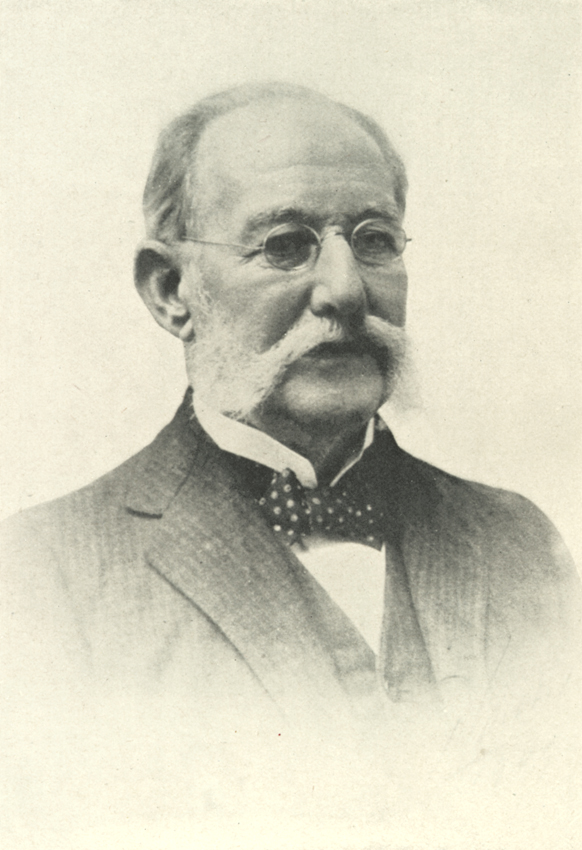
Carlos Juan Finlay (1833 – 1915) was a Spanish-Cuban epidemiologist recognized as a pioneer in the research of yellow fever, determining that it was transmitted through mosquitoes.

He attended school in France in 1844, but was forced to return to Cuba after two years because he contracted cholera. After recovering, he returned to Europe in 1848, but became stuck in England for another two years due to political turmoil, and after arriving at France to continue his education he contracted typhoid fever and again returned to Cuba.

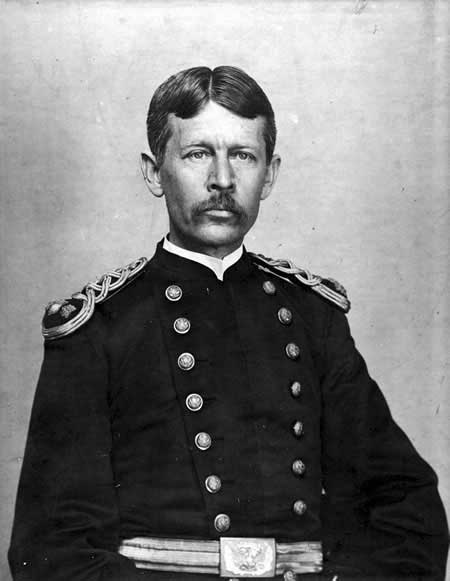
Major Walter Reed, M.D., U.S. Army, (1851 – 1902) was a U.S. Army physician who in 1901 led the team that postulated and confirmed the theory that yellow fever is transmitted by a particular mosquito species, rather than by direct contact. This insight gave impetus to the new fields of epidemiology and biomedicine, and most immediately allowed the resumption and completion of work on the Panama Canal (1904–1914) by the United States. Reed followed work started by Carlos Finlay and directed by George Miller Sternberg ("first U.S. bacteriologist").

Although Reed received much of the credit in history books for "beating" yellow fever, Reed himself credited Carlos Finlay with the discovery of the yellow fever vector, and thus how it might be controlled.

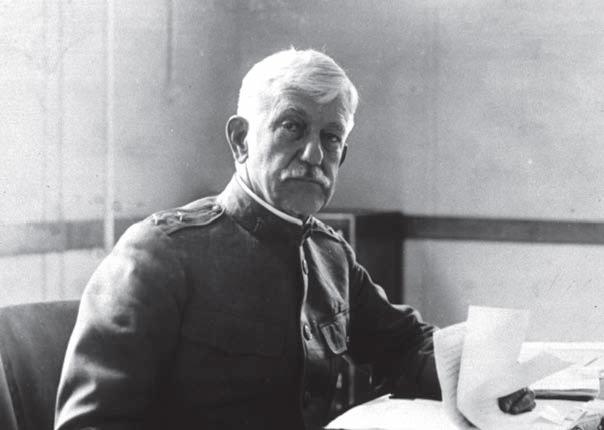
William Crawford Gorgas KCMG (1854 – 1920) was a United States Army physician and 22nd Surgeon General of the U.S. Army. He is best known for his work in Florida, Havana and at the Panama Canal in abating the transmission of yellow fever and malaria by controlling the mosquitoes that carry them at a time when there was considerable skepticism and opposition to such measures.

While at Fort Brown (Texas), he survived yellow fever and met Marie Cook Doughty, whom he married in 1885. In 1898, after the end of the Spanish–American War, he was appointed Chief Sanitary Officer in Havana, working to eradicate yellow fever and malaria. Gorgas built on the work of Major Walter Reed, who had built much of his work on insights of Carlos Finlay.

Star Trek Deep Space Nine and The British Raj

Gul Dukat
Whenever I come across a reference to the British rule of India, I am reminded of Star Trek: Deep Space Nine, and the occupation of Bajor by the Cardassians, but I have never encountered anyone else expressing that opinion. I went a-Googling and this is all that I found:

The Jem'Hadar - Final episode of season 2.

jemadar was originally an armed official of a zamindar (feudal lord) in India who, like a military general, and along with Mridhas, was in charge of fighting and conducting warfare, mostly against the peasants and common people who lived on the lord's land. - Wikipedia

At the introduction to Guy Arnold’s The A to Z of Civil Wars in Africa argues, a lot of the civil wars on the African continent are rooted in the end of the colonial era:
When an empire comes to an end, it invariably leaves a series of vacuums behind it. In the Africa of the 1960s and 1970s, not one but four European empires – those of Belgium, Britain, France and Portugal – came to an end, and so it is hardy surprising that the continent has suffered from a series of political and power implosions. It is the need to fill these vacuums that lies at the centre of much of the violence that has troubled Africa over the 50 years since 1960.

Tyrone

Tyrone
A couple of years ago my boys built themselves a couple of Hackintoshs. Then they ran off and joined the circus and left us with their monster machines. While the guts were identical, cases were not. Naturally I got the spiffy little aluminum cube and my wife got the big black behemoth. A couple of weeks ago mine died. No sound, so smoke, no indications of impending doom, just the sudden disappearance of the video signal. Tried a different display and when that didn't work, I concluded that the motherboard had died so I ordered a replacement from Amazon.
    Then I got to thinking that maybe I could send it back to Gigabyte and they could fix it. When I look into this possibility I found that the board was still under warranty. Well, cool. But if I am going to send the board back to the factory, I should probably make sure it's really dead. You know, maybe it's not the motherboard at all, maybe it's the power supply. Yes, the fan is still running, but there are like 16 voltages coming out of a power supply and just because one wire is working, it doesn't mean any of the others are.
    So I pull the power supply out of my wife's machine (identical guts, remember? And her machine is working fine), plug it into mine, but it doesn't help. Plug my power supply into her system and it works fine. So it's not the power supply.
    Remeber you know how I told you she has the big black behemoth case? Working on it is a major pain. Most of the space inside is taken up with a rack for hard disks. There are like five slots for 3.5" inch drives, but they are all empty. The machine is running off one little laptop drive stuck in the bottom of the case. Who needs a system with five hard drives anyway? I suppose you could do some kind of RAID thing, and it you were a server that might come in handy. I dunno maybe if you were running some kind of fancy game or working with 4K video all that space might come in handy. You would really have to be dedicated to whatever it was to make the expense and effort worthwhile.
    In any case, it looks like the motherboard from my system is truly broken, but it's covered by warranty, so I don't need the board I ordered from Amazon, so I pack them both up in boxes. Now they need shipping labels. When I go to Amazon I am told I can drop my package off with Tyrone, who is hanging out at the local Kwiky Mart (aka Plaid Pantry). Well, that's news to me. I stop off there regularly and I've never seen anything that looked like an Amazon locker. But I drive over there this morning, and sure enough, there he is, bigger 'en Dallas. The nice lady behind the counter tells me he's been there for five months. I've been in there at least a dozen times and I never noticed him.

Friday, May 20, 2016

Nation Building

The Delhi Durbar of 1903 by Roderick MacKenzie
Stolen complete from Rotten Chestnuts, via Dustbury. Except for the picture. I added that.
by severian

I was one of the fools who believed in W’s grand “nation building” project in the Middle East.  I know more history than the average guy, and yet I was fooled, too — such is the power of wishcasting.

In reality, representative government is an Anglo-Saxon thing.  And given the problems we have with it — our current election is between a criminal narcissist and a narcissist criminal — it’s no surprise that cultures with no tradition other than the despotic can’t get the hang of it in just a few years, despite the best efforts of National Review and the Peace and/or Marine Corps.

India is the best case scenario.  Lots of Britons said, and some acted as if they sincerely believed, that the Raj was a “school of democracy” — at some indeterminate future time, Indians would be ready for self-government, at which point Great Britain would leave in peace.  Take that with as much salt as you require, because whether or not any of them would’ve actually accepted a hard date of departure, they still ran the place as if it were a sort of Junior England.  They had to — a subcontinental population in the hundreds of millions was held down by at most 100,000 white folks, commanding a native bureaucracy and army of maybe three times that.  Without significant native buy-in, the Raj was toast, as they found out in spectacular fashion in 1857.

The Indian Civil Service was open to natives almost from 1858, the Ilbert Bill put Englishmen (theoretically) under the jurisdiction of native judges, and the Morley-Minto Reforms provided for direct election of natives to the councils of state.  However it played out in practice — and “Subaltern Studies” people will of course tell you that it was all just a sham — the fact remains that India was about the only place not to go tits up (again, relatively speaking) at independence… and even the Postcolonialists must, however grudgingly, admit that the ICS, Morley-Minto, the Indian Army, etc. were major reasons for that.

Now, none of this should be taken for an argument that only white people can do democracy — as if the ability to mark a ballot is somehow genetic.  Again, see Presidential Election 2016, or any of the literally Caucasian countries surrounding the former USSR.  The point is that representative democracy is the result of a long, long, long history, a unique combination of circumstances stretching back to the Greek polis (and, again, if you want to maintain that white folks have a “government” gene, imagine what would happen if you time warped Demosthenes into modern America and told him that this is representative government.  The poor dude would stroke out).  Other cultures simply don’t have that history, and even the best-intentioned  attempts to impose a facsimile from above give you — at best — India.  Which bills itself as “the world’s largest democracy,” and it is…. sort of, if you add a list of qualifiers about the size of the Chicago phone book.

There’s no substitute for history.  Or, if you want a much prettier phrase, Edmund Burke said that “experience is the school of mankind, and he will learn at no other.”  The best we can do is show ’em how it’s done.  A rational foreign policy starts by acknowledging that…. and best of all, showing ’em how it’s done entails a complete reform of our own system.

It’s either that, or admit that democracy itself is deeply unnatural, and just elect ourselves a despot.

Thursday, May 19, 2016

Happy Valley

Sarah Lancashire as Sgt. Catherine Cawood
Happy Valley is a TV series on  Netflix. We just finished the second season and I have to say it's pretty great. We've got a small town in England and with a name like Happy Valley you'd think it would be a happy little place, and it would be if there weren't people living there. People, as you well know, mean trouble, and the Sargent (above) gets to deal with the trouble that people create on a daily basis. Some of them are simple, like bullies and drunks, but then a dead body turns up and suddenly all the pleasant little villagers are suspects. Great acting, great characters, great fun.

Chewing

Dean Ittuksardjuat, left, and Paul Nangmalik share a freshly-killed seal.
Saw this article in The Oregonian yesterday, thought it was pretty good. By Roberto A. Ferdman at The Washington Post.

This is what life would actually be like without processed food

There’s an alternate reality some like to imagine, a world without processed food in which everyone would be healthier and happier. Only they don’t imagine it well. Or rather, they don’t picture it in its purest form.

The term is thrown at the likes of McDonald’s, Burger King and TV dinners, but it means so much more than that. To understand what life would be like without any processed food, you would have to go back more than 3 million years, not merely a few decades. And you have to understand the effect of the very first form of food processing: cutting.

This might sound ridiculous, but bear with me, because it’s the most primitive form of food processing (cooking, which substantially alters the composition of food, is a significant form of processing, too), and it has changed our lives in ways few people, if any, appreciate.

“If we were to go back to the very beginning of this process that has gone to an extreme today, I think it would really surprise many people,” said Daniel Lieberman, a professor of biological sciences at Harvard University. “We used to spend a disproportionate amount of our days chewing.”

“You can go for an entire day without chewing today, and that’s really bizarre from a historical standpoint,” he added.

Lieberman pointed to the eating habits of chimpanzees, who spend about half their day chewing, for perspective. That might sound ridiculous, but it’s not as far off from how we used to eat than one might think. Our teeth, Lieberman said, just aren’t capable of breaking certain foods down efficiently without any form of extra-oral food processing (a fancy term for any and all changes food undergoes before it enters our mouths).

The clearest example is our capacity to break down meat, which Lieberman, along with Katherine Zink, who teaches at the department of human evolutionary biology at Harvard, tested as part of a new study. The researchers had a group of participants chew samples of both meat (goat, in this case) and vegetables (jewel yams, carrots and beets) in various states of processing — roasted, pounded, sliced and unprocessed (i.e. untouched). And what stood out is how poorly we’re able to break down raw meat, even though people have been carnivores for more than 2.5 million years. That is, until they sliced it into smaller bits.

“If I were to give you a piece of goat that’s raw, it would be like chewing bubble gum,” Lieberman said. “You can’t break it down.”

But something as simple as cutting it into smaller bits, the first of what has become an endless list of ways in which we change edible things before ingesting them, makes an enormous difference. The process didn’t exist until the development of stone tools but marked the beginning of a long and winding road toward where we are today, when chewing our food is more an afterthought than a several hours affair.

The other thing Lieberman measured was the force or energy participants exerted per chew, and it only compounded the results. When Lieberman took this into account, the effect of slicing or cooking meat was even more pronounced. In all, the two reduced the number of chews per calorie by nearly three and two, respectively. And it adds up.

“The results speak for themselves,” he said. “It’s astonishing what something as simple as cutting meat does, how effective it is.”

People might balk at primitive tools, or primitive processes, such as slicing food into smaller parts, but these mundane forms of processing food have actually had sizable effects on our lives.

There are obvious consequences of all the time we don’t have to spend chewing today, such as how it has allowed us to reallocate that time to everything else we do throughout the day. But there are less obvious things, too, and not all of them are positive. In particular, two negative outcomes stand out. And in some ways they give credence to broader worries about what processed food has done to our bodies.

The first, interestingly enough, is that it has resulted in more dental problems. When we chew, we generate forces that act on our jaws, and the bones in our jaws grow in response. Less chewing means less developed jaws.

“There’s pretty good evidence showing that people who chew less and chew less hard grow smaller jaws,” Lieberman said. “The problem is they tend to have the same size teeth, and that creates all sorts of problems, like crowding and impacted wisdom teeth, which used to be incredibly rare.”

The second and considerably more problematic consequence is that even the earliest form of food processing has probably contributed to obesity. When you process food, whether by cooking it or simply cutting it into smaller pieces, you tend to get more energy out of it relative to the energy expended processing and digesting it. So we now get more calories from the same amount of food than we used to, even though it’s no more satiating. Surely, Lieberman said, that helps explain why we’re eating so many more calories than we used to.

“If you eat a mass of corn, and you eat the same amount of corn but ground into flour, you get more calories from the corn flour than the whole kernel,” he said. “We have taken this way too far, processing food to a point where the processing itself is probably confusing our bodies.”

Processed corn, of course, is more prevalent in the modern American diet than anything else. And the modern American diet hasn’t exactly been kind to the modern American gut.

In some ways, all of this gives credence to the raw food movement, which argues for the healthfulness of eating unprocessed and uncooked vegetables. While slicing vegetables didn’t have as much of an impact as slicing meat, cooking vegetables did. Uncooked veggies might take longer to chew, and require more energy to digest, but it’s this very quality that probably makes us more mindful about how much of them we eat.

Of course, there is a tipping point. A world without any extra-oral processing would mean a world in which we spend way too much time with bits of food in our mouths. It would probably also mean a food world without much variety.

“Food is an intensely aesthetic experience today — when we process food, we also perceive it and enjoy it in different ways,” Lieberman said. “The earliest forms of food processing allowed for the beginning of cuisines, which is something we take for granted.”