Intel's Ronler Acres Plant

Silicon Forest
If the type is too small, Ctrl+ is your friend

Showing posts with label Radio. Show all posts

Tuesday, June 2, 2026

Meshtastic

WisMesh Tag

Jack got hisself a new toy - a Meshtastic radio, about $50.  It's a little smaller than a smartphone. The four dots you see are for a USB cable with a magnetic connector. Connect it to your phone (does it have Bluetooth?) and you can send text messages over the Mesh Network. The Mesh Network is made up of whoever has a similar radio within range, which can be a few miles. Popular with some Neighborhood Emergency Teams. These mesh radios don't use the cell phone network and data is encrypted, so transmission is reasonable secure.

The big problem with these things is you need other people to also be using them. If you and your mother are the only ones with these radios and you are fifty miles apart, this thing isn't going to help you.

Meshtastic Map

I kind of expect them to be popular in war zones since Telegram uses the cell phone network and Starlink depends on Elon's mood.

Tuesday, April 28, 2026

Blasting


Bachman Turner Overdrive - You Ain't Seen Nothing Yet 1974 Video Sound HQ
NEA ZIXNH

It's a nice day today, so I've got the windows down in my car, cruising up Highway 217 and this tune comes on the radio. Actually, YouTube Music via my smartphone and then through a headphone cable to the radio. So this tune comes on and it's a banger, so I wanna hear it loud. But I've got the windows down. Ever notice that nobody ever drives with the windows down anymore? Anyway, back to the radio. Can the radio handle it? And more importantly, can the speakers? I've dealt with dead speakers before (for example) and I don't want that. Unfortunately the only way to find out if they can take it is to turn up the volume, so I did. All the way to 35. Normally I'll have it around 15 or so when I am driving around in town, 25 MPH or less. On the highway with the windows up I'll turn it up to 20 to 25. This 35 business is uncharted territory, but the radio and the speakers handled it just fine. I think full volume on this radio is 40 or 50. Never tried it.

I think somebody spent a couple of bucks on the sound system before I got the car. The radio is a Kenwood with a detachable faceplate. It has one big knob that, besides turning like a volume control, it also acts like joystick to do I dunno what. I kind of learned a couple of things, but then I started using my smartphone and forgot all about the front panel controls. Now I use the buttons on the steering wheel. On the right side of the wheel I have buttons for the cruise control, which I use the heck out of. The stereo controls are on the left side of wheel. They allow me to changed the volume and channel and also mode. It has five or six modes (USD, CD, Radio, Blank/Inactive?, and Auxiliary, which is the one I use with my smartphone). So I no longer even have to touch the front panel.

Friday, August 8, 2025

Clandestine Activity

The Polish Officer by Alan Furst

Page 161

We're in the early stages of WW2 and the Germans are preparing to invade England from northern France (Operation Sea Lion).

Montmarte Paris
Hotel Bretagne is somewhere around here

The resistance has set up a radio transmitter in a room on the 6th floor of the Hotel Bretagne in Paris. With all the German army activity, there is a great deal of information that needs to encoded and then transmitted to London. The amount to be transmitted takes long enough that the Germans are able to get a fix on the transmitter. They break down the door and arrest the teenage girl operator. She crunches a cyanide capsule in her teeth and dies.

Mk. XV British WWII spy radio set

Nazi radio man Grahnweis inspects the Mark XV radio transmitter: 

Grahnweis took a soft leather tool pouch from the pocket of his uniform jacket and selected a screwdriver for the task of getting behind the control panel. To the senior officer looking over his shoulder he said, "Maybe something new inside."

There was. 

Grahnweis left the hotel by the Saint-Rustique side of the building; meanwhile, the senior officer exited on the rue Lepic - this parting company a mysterious event that nobody ever really explained. For a time it wasn't clear that Grahnweis was ever going to be found, but with persistence and painstaking attention to detail, he was. Crown on the second bicuspid molar, fillings in the upper and lower canines, a chipped incisor. Yes, that was Grahnweis, if a tattered charcoal log under a jumble of brick and tile could be called any name at all.

I had to read that passage twice before I figured out what happened to the Grahnweis and the senior officer.


Sunday, January 5, 2025

Old Radios

Old Radios

I like fancy old radios. Not sure why, I don't have any, and I certainly don't want one. I never listen to the radio around the house, and I sure don't need any more stuff. I think maybe I just like the idea of old radios. A hundred years ago, home radios receivers didn't exist, then they did and then everybody had one and now they're a default feature on any stereo system. In the 20th century it was radios, in the 21st century it's smartphones. I wonder how fast dead cell phones are accumulating. In a zillion years are geologists going to discover a layer in the ground of smushed cell-phones?

Wednesday, May 1, 2024

KQRZ

KQRZ

Came across this station while driving. I've come across it before and it's pretty great. 'Real Oldies' is how they bill themselves. The only problem with this station is that it is a low power station, so by the time I've gone a few miles down the road it has faded into oblivion. Something prompted me to wonder if maybe they had a website, and sure enough they do. Then I realized that anybody anywhere in the world could tune into these guys, so here I am telling the world about these guys - KQRZ Real Oldies

They've been playing Public Service Announcements where Joe Walsh is shilling for amateur radio. Did I hear that right? Joe Walsh? Really? Um, yeah, really:


Joe Walsh Ham Radio PSA for The ARRL
Michael Huey AKA W7ZI

This is as weird as finding out the Rod Stewart built a monster model railroad layout in his attic. This is how I know Joe Walsh:


Joe Walsh - Life's Been Good
Joe Ramen

Usually I go for some kind of action with my music videos, but I really like this still image.

My friend Jack and The Silicon Graybeard are both amateur radio men.

P. S. The logo on the website has a black background, but when I copy the image and paste it into my blog it has a white background, so I started poking around looking for ways to turn the background black. I looked at this and I looked at that and then I realized when I opened it in Google Photos, it had a black background, so I took a screen shot and cropped it and here we are.


Thursday, December 21, 2023

Arcane Knowledge


1957 Telefunken Opus 7 Repair & Bluetooth Mod
Mend It Mark

This video is almost an hour long, but he doesn't waste any time, it's all action. The radio is dang near as old as I am. It predates PCBs (printed circuit boards). And where did he find a schematic? Well, it's a German radio, and the Germans are known for being organized so I guess that's not too surprising.

He plays fast and loose with that soldering iron, but being as this thing is going to be sitting on a table in somebody's house and not being vibrated to death in an airplane I suppose it's good enough.

Inserting that Bluetooth module into the radio's circuit was real wizardry.

I do wonder that he didn't replace the speakers. Speakers that old have got to be junk, but maybe the Germans used better material for the speaker cones than the flimsy paper we used in our consumer radios.

I wonder how many people have the knowledge and skills to perform this kind of repair. Not many I suspect. Maybe one in a million? That would still amount to 7,000 people worldwide, and most of them would be concentrated in the northern hemisphere. I was going to say the West, but Russia probably has an outsize grasp of arcane knowledge.

Via Posthip Scott

Old radios have appeared here and here and here.

Saturday, November 18, 2023

All the Light We Cannot See


All the Light We Cannot See | Official Trailer | Netflix
Netflix

Started watching this mini-series (4 episodes) last night and it's pretty great. We have a blind young woman who is holed up in her family home in St. Malo, France, while the Allies are bombing the bejesus out of the place. There's no food and the Nazis, who are nominally in charge, have locked the city gates - no one gets in or out. This is like two months after D-day, the Nazis are on the back foot and determined to hold out to the last man. Well, some of them are.

There is a radio transmitter in the girl's house and every evening she goes on the air and reads Shakespeare into the ether. One German soldier has been listening to a station broadcasting on that same frequency ever since he was in high school. He is supposed to be tracking her down because Nazis good, radio bad, but he's been listening to this same station since forever, he can see how the war is going, and he's the only one on the job, so if he says he can't find her, she can't be found.

There's also a mean Nazi who is also looking for the girl because he is convinced she has a precious jewel with magical powers that will cure him of whatever disease he is suffering from. He doesn't care about the war or any of the people in the town either. He just wants the jewel and he will kill anyone who won't tell him where the girl is.

Locking the gates of the town sounds medieval. Well the town is:

St. Malo, France, after the battle

St. Malo today

Wednesday, October 5, 2022

RC Mower

RC Mower

Spotted this machine on the way back from lunch yesterday. It isn't a robot, it's simply radio controlled, like a toy car or airplane. Their big claim to fame is the ability to climb and mow steep slopes which makes it perfect for all those freeway embankments.

RC Mowers TK-52XP Tracked Rotary Mower (52")


RC Mowers TK-52XP Tracked Slope Mower on Steep Highway Overpass
RC Mowers USA


Saturday, February 19, 2022

Wednesday, December 22, 2021

Numbers Stations


The Mysterious and Fascinating World of ‘Numbers Stations’
Today I Found Out

I've always been a bit curious about Numbers Stations. Simon doesn't have all the answers, but he has compiled a bunch of info. It's an entertaining video.

He mentions The Conet Project. Wikipedia has a page and so does SoundCloud. He also mentions several tunes have incorporated sounds recorded from Numbers Stations. This is the only one I found.


Jean Michel Jarre - Magnetic Field
Jarre98

It's not much of a tune, it's kind of long and the bits I've listened to are strange. Listen if you like.

I did another post about communications last year that included another video about numbers stations. It has a slightly different take on the subject.

Sunday, November 28, 2021

RARET

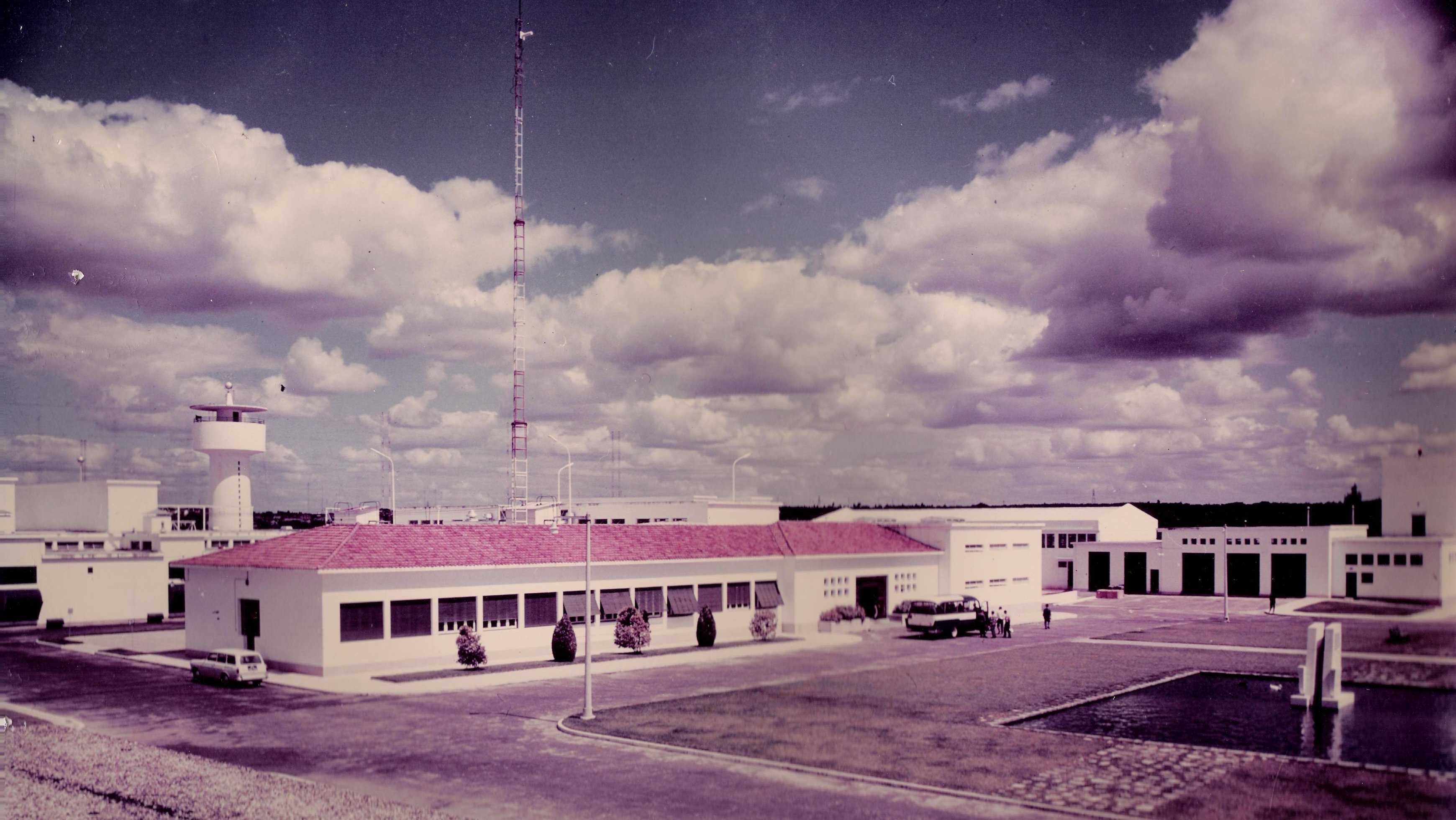
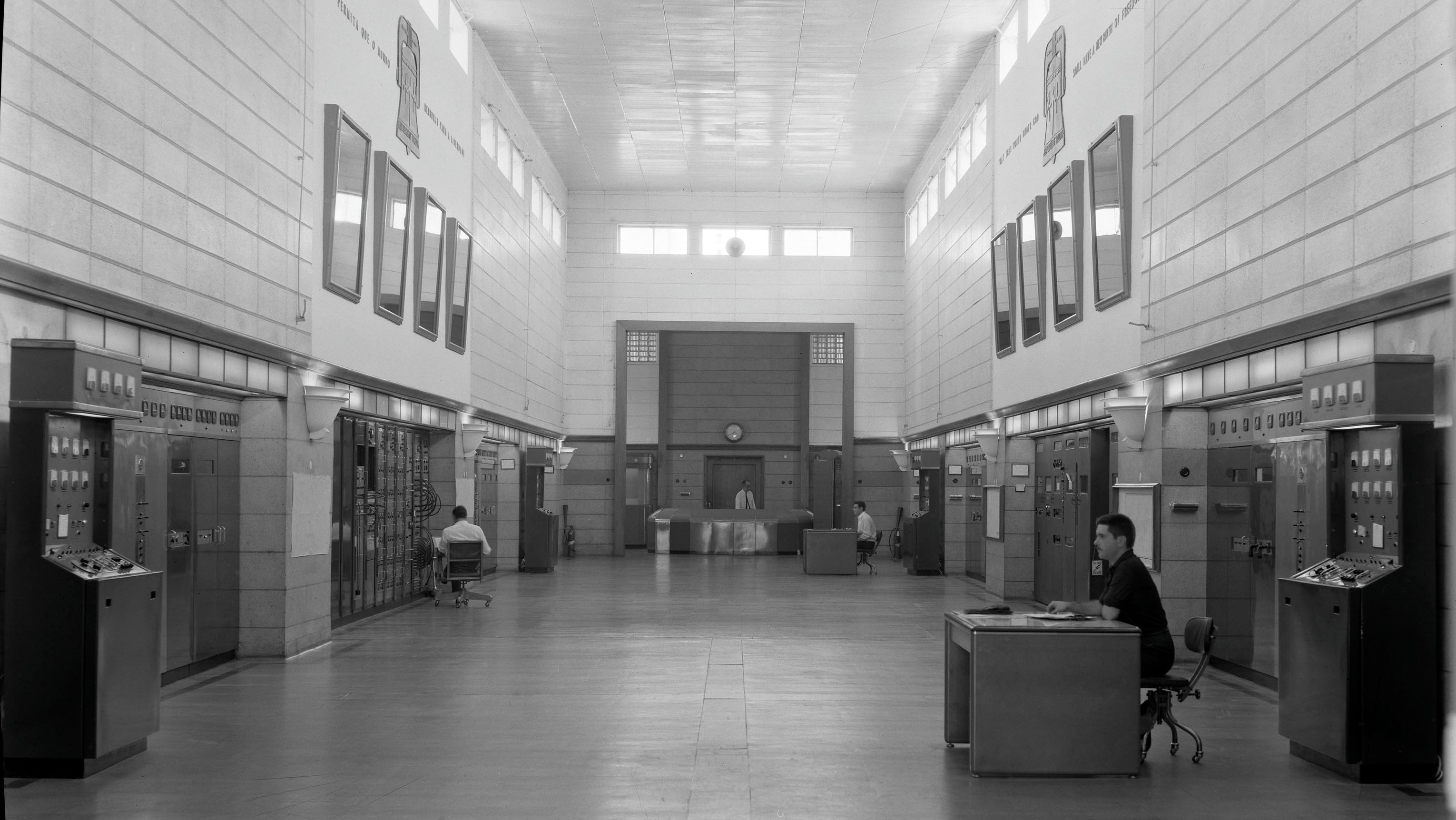
We started watching Glória, a Netflix series about a Radio Free Europe broadcasting station  in Portugal during the Cold War, so I thought I would see if there was any truth behind it. One thing I found was this story on The World News. The original is in Portuguese, Google translated it. The label on the first picture is completely wrong, but I think there was a school at the complex, so it might be from there.

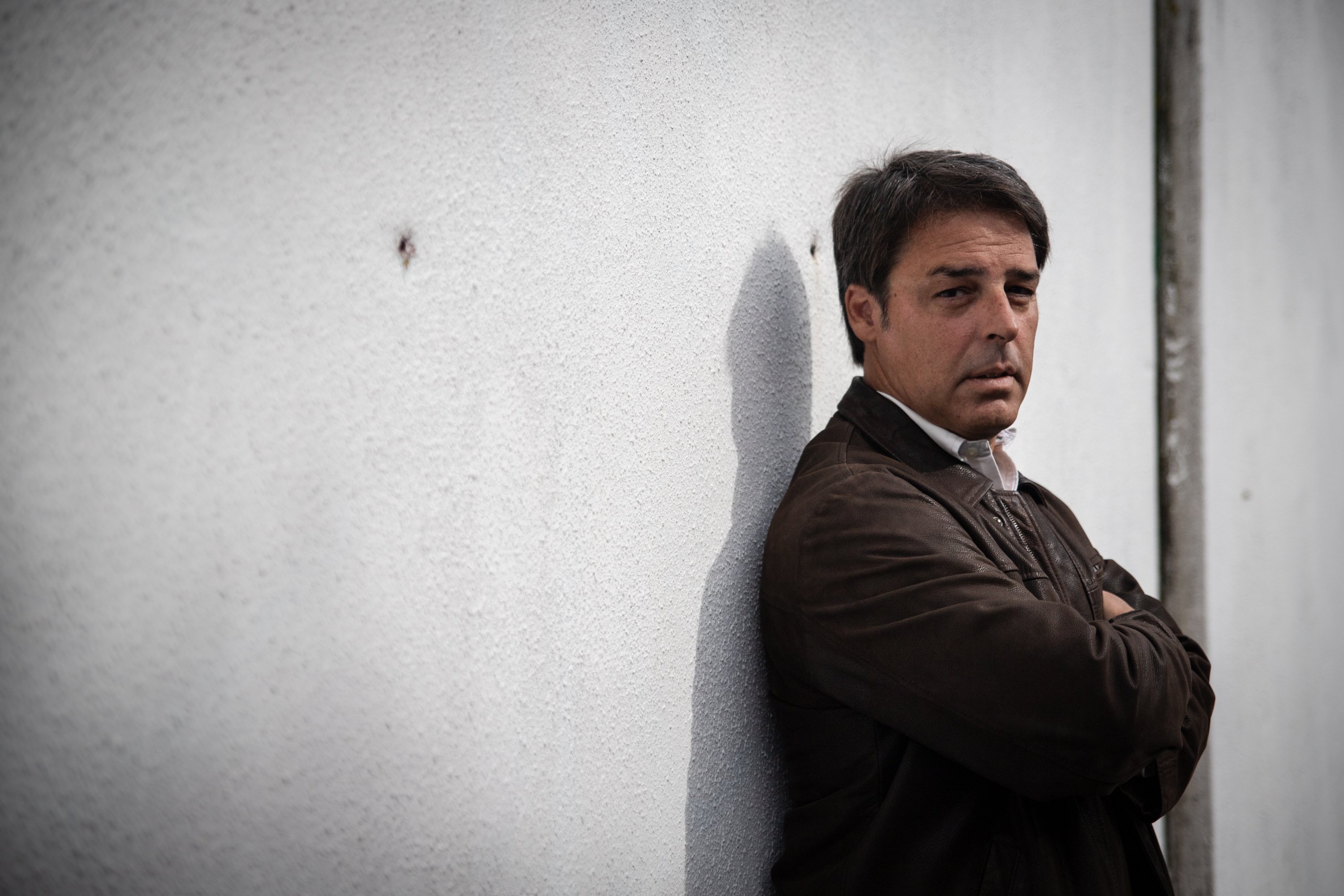
Anna
11/1/2021

▲ "There were around 20 to 30 translators from Eastern countries in Portugal, the Portuguese officials did not know those languages. Therefore, these people could be infiltrated", says researcher Vítor Madaíl

Vítor Madaíl is investigating the impact of RARET in Portugal, the center for relaying anti-communist propaganda. How do you see the Portuguese series from Netflix? It could have happened.

When, in 2017, Vítor Madaíl was looking for a topic for his master's thesis in the Contemporary Modern History course at ISCTE, he ran into a problem. He needed a story from the second half of the 20th century that would illustrate the relationship between the United States of America and Portugal. The Marshall Plan? It was already studied. The Portuguese introduction into NATO? The same thing. It was at that time that he turned to broadcasting in the middle of the Cold War, a vital weapon in the struggle for soft powerbetween the Soviet Union and the USA. That's where it ended up at RARET, a mega relay center created on July 4, 1951, with 196 hectares and 1.5 kilometers of antenna field, planted in the Herdade de Nossa Senhora da Glória do Ribatejo, connected to Radio Free Europe and financed by the CIA. Little or no information existed. From the side of North American literature, RARET was treated as a mere automatism. On the Portuguese side, an article here, a report there, little more. The question remained: how come no one had picked up on a history with more than 40 years in which Portugal emerged as one of the points of combat in the middle of the Cold War?

It took two years to complete the investigation. He interviewed former employees (Portuguese and North Americans, some of whom have died), consulted various archives, such as the Hoover Institute (where there are historical records such as maps or recordings of meetings of the two countries or even RARET retransmissions) or the National Defense Archive (where he discovered the blueprints of that huge American-Portuguese broadcasting complex). But you want more. He is doing a PhD on the same topic, to follow the entire period after the Estado Novo. He wants to understand how RARET has maintained its democracy with Portugal.

Now, as the premiere of Netflix's first Portuguese production approaches, the series “Glória” (on November 5), based precisely on RARET, the Observer spoke with Vítor Madaíl to understand how it was possible to implement an operation of that level in middle of a rural region, far from the Eastern bloc and the US. And how is it that António de Oliveira Salazar's regime, which restricted freedoms, agreed to join this crusade. And of course, we also tried to find out if one of the premises of the series created by screenwriter Pedro Lopes and director Tiago Guedes was even possible: the existence of a KGB spy in RARET. “It was entirely possible that what was fictionalized could have happened. About 30 translators from Eastern countries who could be infiltrated were here. This happened in Munich, at the Radio Free Europe headquarters where all the American propaganda came from. Here, as far as I know, it didn't happen, but it was possible”, he says.

▲ Vítor Madaíl recalls that RARET followed "the idea that the BBC developed during World War II: the free French speaking to the French in the interior" - Association for the Defense of the Ethnographic and Cultural Heritage of Glória do Ribatejo

From what he told me before, the story of the series “Glória” might not even have happened, because the 40 years of a relay center in Ribatejo were not in the plans.
Exactly. Radio Free Europe [REL] was to come for ten years. The men of the National Committee for Free Europe, which overseen the REL, had an innocent idea, because they thought they could raise the countries of Eastern Europe by using radio broadcasts to replace the local governments in those regions. Ten years of intense propaganda through broadcasting would be enough to change the internal order. This even before the existence of RARET. Americans, having the Voice of America, which is the equivalent of the BBC or National Broadcasting radio, could not use it for the same purpose. That is, for anti-communist propaganda. So, this Committee was founded, which was a joint partnership between the CIA and the State Department. All early men come from the former OSS, which is the predecessor of the CIA. When in 1949 this committee was founded, it is not founded with Radio Free Europe, it is done with other organizations, very dedicated to supporting refugees from Eastern Europe. When, however, it is realized that this support would be useful if refugees were to speak for their own country, they instituted the concept of “substitute radio”. It's the idea that the BBC developed during World War II: the free French speaking to the French countryside. Then came the idea of ​​making a radio, we were in the golden age of this technology. But where could they put it? In the part of Germany occupied by the North Americans, taking into account the Potsdam and Yalta Agreements. First in Munich and then broadcasters in other regions. Emissions began on June 4, 1950 to Czechoslovakia. But they quickly realized that, emitting there in a medium wave,

Because the Soviets could more easily interfere.
Precisely. It is necessary to relocate. That's where an initial study of a North American company comes in, with maps, where they will see the areas to reach the preferred targets. Here Portugal is identified, as well as southwestern Spain and northern Morocco. Except that, in addition to the technical issues of where to place the issuer to get the best coverage, there were a number of political issues. Spain was an international pariah, Morocco was not, so which regime gave guarantees? The Portuguese.

Why was it neutral?
No. Don't forget that we already had Base das Lajes here. When the British left, the Americans entered. We joined the Marshal Plan, with which, in a second phase, we got funds. And then, Portugal's entry into NATO, as a founding member in 1949. The relationship was, therefore, privileged. On the other hand, the regime was anti-communist, so Salazar saw this almost as a crusade. Not only did he pursue the communists locally, he also had the chance to do so through this radio.

"Gregory Thomas installs himself at the Hotel Avis, where Calouste Gulbenkian was staying, and tells him that he has to talk to Salazar and then go to São Bento. It is Ricardo Espírito Santo who makes these contacts. In the background, all the plans are made , antenna projects, which land to buy... And it is Salazar who contacts the National Broadcasting directly."

On the obelisk at the entrance of RARET is Salazar's sentence about the liberation of peoples from the Soviet regime, which is an enormous contradiction.
Yes Yes. And that brings us to another question: why was RARET never well known? It was very difficult for Salazar to publicly link himself with the Americans. They then realize that only with an agreement with Portugal. But the genesis of Radio Free Europe had also been cloaked in the US. It was an entity created by individuals. Therefore, they wanted to hide any connection to the US government. If there was a problem, the government could say it had nothing to do with it. That's why there was originally no public agreement between the two countries. What there is is a concession at the request of an entity to the Portuguese government, as it had already done with Radio Marconi.

Did anti-communist contents first travel from the US to Munich and only then did they reach Portugal?
Yes. Initially they departed from New York and were transmitted to Munich. Afterwards, they continued on to Biblis and Horzelrichen, which they relayed to target countries in the eastern bloc. This operation was short-lived and on precarious bases. It was at this stage that they used the mobile transmitter “Bárbara”, which belonged to the OCSS, the predecessor of the CIA. That vehicle would come to Gloria. With the inauguration of the Munich facilities, Radio Free Europe now has facilities where journalists, editors, editors and all the necessary staff to produce the broadcast's contents have been placed. They went to Maxoqueira, the receiving centre, on various frequencies from different channels in order to be able to reproduce themselves in the best quality retransmission. The circuit was: Maxoqueira, Auto-Monumental Building in Lisbon (RARET headquarters), Glória, target countries.

As for the negotiations between the US and Portugal, did they take a long time?
A little. The negotiator, Gregory Thomas, arrived in January 1950. He only got a positive response in April of that year. However, when the Anonymous Society of Radio Retransmission was formed, it was published in Diário da República. And you look at that and you see a banal company. Looks like a radio repair company, for example. Nobody cared what it really was. In Portugal, being the beginning of the Cold War, with the Korean War raging, and when the Soviets said they already had missiles, it was thought that this operation could turn the country into a target. There is then a discussion if it is worth having a radio with those characteristics here. It turned out to be Salazar's personal wish. There was a conversation with Ambassador Scott Nash, to which I had access, where an audience is requested to expose all the American interest. It happened in December of that year. But always with the idea that the US government had nothing to do with it. Salazar quickly understands what this is about, but it is not clear that he knew the CIA was involved. But I knew it was led by someone connected to the US government. Going back to Gregory Thomas, who had been commercial attache during World War II, being an OCSS agent, he was based in Lisbon. Establishes contacts with the Portuguese elite, one of them is Ricardo Espírito Santo, uncle of Ricardo Salgado. who had been a commercial attache during World War II, as an OCSS agent, was based in Lisbon. Establishes contacts with the Portuguese elite, one of them is Ricardo Espírito Santo, uncle of Ricardo Salgado. who had been a commercial attache during World War II, as an OCSS agent, was based in Lisbon. Establishes contacts with the Portuguese elite, one of them is Ricardo Espírito Santo, uncle of Ricardo Salgado.

▲ The exterior and interior of RARET's main building, in Glória do Ribatejo, when the relay center was still in operation - Association for the Defense of the Ethnographic and Cultural Heritage of Glória do Ribatejo

That is, the country as a bubble.
Yes, more conspiracy in this story. This is the person Gregory Thomas turns to to talk to Salazar. I heard the recording. He installed himself at the Hotel Avis, where Calouste Gulbenkian was staying, and told him that he had to go talk to Salazar and then go to São Bento. It is Ricardo Espírito Santo who makes these contacts. Thereafter, the negotiation takes place with the Chairman of the Board. In the background, all the plans, antenna projects, which land to buy are made… And it is Salazar who contacts the National Broadcasting directly to inform about this operation, asking for their help. The director of the Issuer, Mário Novais, who has never been with him, remains with this “mission”. And it is there that, through Tomás Pinto Basto [a family of reference in navigation logistics in the Iberian Peninsula], the terrain of RARET is discovered.

Was it the first bet?
No, there were others. That whole area was appetizing. It was necessary to have a flat spot, without major interferences for the waves to come out freely, a remote place, close to Lisbon, with little population. Gloria obeyed almost all conditions. 70 kilometers from Lisbon, the material was going by boat. There were no roads. It is the North Americans who pay for the electricity, the roads, because the region had nothing. But it had the ideal technical conditions.

Going back to the story of the ten-year concession, when do you realize that the operation will take longer?
The Soviets fought back. In Poland, East Berlin and Hungary, for example. We are beginning to realize that RARET will have to be prolonged. There is an internal debate in 1955, midway through the concession, between the Minister of Communications, the Minister of the Navy, the Minister of the Air Force, among others, to understand what to do with that infrastructure after the concession ends. What was planned was that he returned to the State. But due to international events, the men at Radio Europa Livre understand that this is something to go on. In 61, during the renewal of the contract, diplomatic relations between the US and Portugal began to have problems because of the Colonial War. The Americans had not helped much at certain times, Portugal joins the UN in 1955 and is exposed to international criticism, the pressure from the Indian Union was quite great. Relationships, which had started in the 1950s, will become more strained. This culminates in the year of all dangers, which is 1961, with different episodes such as the invasion of Angola or the taking of Goa. When it comes to the negotiation phase, the Americans, who think that RARET is not a base for Lajes, are convinced that the concession will last. And behold, Salazar drops the bomb: there is no possibility of granting a new concession, a maximum of six months.

"In 74, the 25th of April occurs and it is the officials themselves who make an effort to stop RARET from leaving. The revolution stopped at the gates of RARET. communist cell there, where there is talk of an imperialist radio, but the truth is that the communist ideology stopped at the door where the other ideology was."

And this is Salazar's personal decision?
Yes. Americans are left to die. In August 61 the construction of the Berlin Wall begins, the Cuban crisis begins to escalate, and there is a transition from the Eisenhower administration to that of Kennedy. In other words, Americans need this means of soft power more than ever. It was an extremely important vehicle for revealing reality to the Soviets, according to the Americans. And that's when Salazar takes off the rug. But like the base of Lajes, it never completely removes the rug. It's just that, according to the internal reports I consulted, the Americans felt that this decision meant keeping silent for a year. It was necessary to move, representing more costs, and it was probably not even possible to make a RARET in the rest of Western Europe.

And the Soviet Union knew this. He felt at an advantage.
Clear. A lot of money was spent on their part trying to impede communications. A budget bigger than that of the Americans. It was astronomical.

So how is the imbroglio resolved?
It was delayed every six months. In April 1963 all this calms down, with a new contract being signed for another ten years. In 1973, Radio Free Europe was being campaigned at the congress where it was said to be a “relic of the Cold War”. That was the term. It even started before, with the publication of a magazine, Ramparts, where the link between the RFE and the CIA is exposed. Until then, that connection had been denied. A fundraising campaign, “Crusade for Freedom” was even created. But when you look at the money raised, you realize that they have nothing to do with it. The RFE was held by the CIA, no doubt about it. And this happens at a time when there was an intention to do away with radio stations, where advertising was carried out. Because there was an attempt to get closer to the Soviet countries. It was part of a time that had already passed. This was the campaign. There is even a secret study, carried out by the CIA, in 1969, which analyzes the consequences of the closure of the radio in West Germany, Portugal and Spain. However, the concession here ends. There is a period of calm in the USA, but in 1974 the military coup in Portugal, the 25th of April, took place. RARET is without a contract at the time. Americans are worried again.

Was this frictional environment present at RARET?

No. The employees continued to work quietly. In 1974, the 25th of April takes place and it is the employees themselves who are pushing for RARET not to leave. The revolution stopped at the gates of RARET. There is a small article in Avante from 1973 in which one realizes that there is a communist cell there, where there is talk of an imperialist radio, but the truth is that the communist ideology stopped at the door where the other ideology was. This one spoke louder. Because it had to do with people's survival. There is even a story where it is said that a man rebelled against this entire American context and whoever was in charge of RARET replied that he could leave, but the salary would continue to be paid. They didn't want waves.

It was another kind of waves…
Yes, positive waves. It's a Hertzian war that happens, that you don't see. As Vaclav Havel [the last president of Chescoslovakia and the first of the Czech Republic] says, the important thing for collapsing the Berlin Wall was not the shots or the bombs, but the weight and importance that Radio Free Europe had on the conscience of people.

▲ Vítor Madaíl is undertaking a PhD on the same topic, to follow the entire period after the Estado Novo. Wants to understand how RARET has maintained its democracy with Portugal - TOMAS SILVA/OBSERVER

After the 25th of April, and until the dismantling of RARET, were there any other fundamental episodes in your investigation?
A bomb attack in 1975.

The author was never known. There was talk of the FP25…
There is no evidence of that.

Couldn't figure it out?
No. The document was in the Benavente court, but it has already been thrown away.

But wasn't it a massive attack?
No. Two firecrackers blew off the antennas. They didn't fall. It was claimed by an anti-communist and anti-imperialist group. Ronald Reagan was coming here at that time, it was to get attention.

"At the time, we were at a stage where, in the North American perspective, the level of the conflict in Germany could be reached. And radio would be one of the places the Soviets would want to occupy. Having this backup in the extreme of the Iberian Peninsula was guaranteed. "

He told me in one of the first conversations we had that what can be seen in the series “Glória”, about a Portuguese spy, may even have happened…
There may have been. It is perfectly possible that what was fictionalized by Pedro Lopes could have happened. There were about 20 to 30 translators from Eastern countries in Portugal, the Portuguese officials did not know those languages. There had to be someone who edited, who chose the broadcasts, who translated at Maxuqueira [receiving center] what came from Munich. There could be a risk of rebroadcasting Radio Moscow broadcasts and that would be a shot in the foot. Therefore, these people could be infiltrated. And that happened in Munich, where there was even an attack on the premises of Radio Free Europe, which were destroyed. There are even stories of insiders who got to know each other thanks to news coverage. They were from the Romanian and Bulgarian secret services, for example. Not here.

But is it a possibility?
Yes. The PIDE, for example, had important control over the people who entered RARET.

This is visible in the series.
There is a report from the PIDE describing the safety of the Monumental garage. When Portugal joined NATO, the army was restructured. And one of the structures that were flagged as critical is RARET. As a concession, a private thing, it is immediately included in this defense plan for the interior as a critical point, like hospitals or refineries. For the Santarém military zone, since there were not enough forces, the responsibility, in case of an uprising, is assigned to the National Legion. RARET, right from the start, has a GNR post. It wasn't in Gloria, it was there. When we arrived on the 25th of April, the following week, a platoon of troops went there, which did not leave until August 1974. It was, therefore, of great importance. If there was no risk, they wouldn't go.

Didn't anyone in the Armed Forces Movement want to take over RARET?
No, no. They wanted to defend her.

With few documents and records from Portugal, what did you discover on the North American side in your research?
At first, Salazar only authorized the retransmission. It may look smaller, but no. He had the chance to say, on an international level, that nothing was transmitted from there. In the 1961 contract, it was already possible to transmit. At the headquarters, in Lisbon, there was a group of studios, in which everything was set up to change, at the last minute, certain events. The translators were even there to give voice to new recordings. But there was no newsroom. The content was produced in the USA. Here there was only one backup .

TThen, another of the reasons for RARET to be based here is that at the time we were at a stage where, in the North American perspective, it could reach the level of the conflict in Germany. And radio would be one of the places the Soviets would want to occupy. Having this backup at the far end of the Iberian Peninsula provided guarantees. As for the figures that made up RARET, there are many Portuguese linked to the regime. António Ferro's son, Tomás Pinto Basto, António de Cértima, who will remain until 1974. In fact, Pinto Basto will stay until the 80s.

▲ "The creation of a maternity hospital or a school (in the images) is also to ingratiate themselves with that population. So that not too many waves could arise" - Association for the Defense of the Ethnographic and Cultural Heritage of Glória do Ribatejo

Were everyone comfortable with this connection to the US?
It was more relevant to be working for anti-communism. People were imbued with a spirit. At the RARET meetings, they are convinced that they are doing a work for freedom, which in Portugal there was not. They were doing something for the west. Just as they are convinced that they are doing a great work in Africa. Gregory Thomas goes to Africa in the 60s and the newspaper O Séculogives this news. And here there is a double use, the two countries are used. “If the Portuguese are helping the North Americans against Soviet totalitarianism, you are helping us on the African continent against the same ideology, perpetuated by the liberation movements”, something like that. It's an exchange for an exchange. On the American side, it is also understood, at some level, that they are all fighting a common enemy. And in Africa too. They are almost matched fights. The final position of States at the level of presidents is one thing, but at the intermediate levels there was an understanding.

Did RARET's operation reach the level of the US president?
No, but that of the president of RFE yes. In Kennedy's presidency there is a big lunch to expose the work of the RFE that underwrites the role of the radio. I knew there were broadcasts in Portugal, but the conversation didn't end there.

What was, in fact, the power of RARET?
It was a platform comparable to the Lajes base, but within the scope of soft powerWithout RARET, the Americans could not speak as they spoke to the Eastern bloc. Whenever any tension happened here, Americans were deeply shaken by the possibility of the broadcasters being shut down. In the 1980s, it tried to replicate the operation in Israel, but it never went ahead. In 1991, when there is no longer the Berlin wall and the democratization process begins to take place in the Eastern bloc, with the USSR already fallen, there is a new agreement for a 15-year concession, under the presidency of Bill Clinton. And here the agreements are already public, of course. The concession rose, however, through the ranks. Before RARET ended, there was, therefore, the will to continue, even with the end of the Cold War.

What is the fundamental reason for your order?
The costs. Under Bill Clinton's presidency, there is a relocation of US strategy, where the focus is on the ex-Soviet republics. And this had already started to happen in the 1980s. From 1977 onwards, they began to emit even further east. RARET also starts broadcasting to Portuguese communities around the world, during a certain time. In 91 there is a large investment in equipment. Meanwhile, Vaclav Havel makes a dollar offer to establish the headquarters of the RFE in the former communist parliament in Prague, out of Munich, where they still stand today. In other words, having the operation in Portugal no longer makes sense. This story ends with the 500 watt transmitters, which had recently been placed in RARET, where transmission begins to be made by satellite. In the 90's, this equipment is dismantled by former employees to be installed in the Mariana Islands. And this is where Radio Free Asia is created. They are there to work for a year. The operation moves to China, Vietnam, Cambodia, etc. RFE, on the other hand, goes to countries like Georgia or Azerbaijan. And that's it, the memory is waiting for someone to tell it.

"Who defended RARET? You have to think that the extreme left was critical, for example. How did the government withstand the pressure? What was the intervention of the US embassy? Why did RARET continue after the fall of the Berlin Wall ? That's all I want to address and investigate in my doctoral thesis."

How much has the Portuguese State collected in this period of more than 40 years?
I can't tell you concretely. Gregory Thomas told Salazar that in 1963, without the jobs, the net contribution was about 12 million dollars to the Portuguese state. Not to mention jobs, of course. Funds were important. As well as for the population of Gloria. They were the ones who asked RARET not to leave there.

Why did the Americans also want to invest in that region?
RARET was a Portuguese company. At the administrative level, 60% were Portuguese. The rest were American. On their part, there was an attempt at public relations. They realized that this social responsibility was important because it created bonds. Until the 60s there was medicine for work, but, apart from the benefit of working there, there was little else. The creation of maternity hospitals or schools is also to ingratiate themselves with that population. So that not too many waves would rise. That is, since we are here, we give something back. Tomorrow you can speak for us.

It was the American dream there.
Yes. And it had an effect.

Why did you get involved in this story? Do you have any connection to RARET or the region?
None. I had to present innovative work that no one else had done. I wanted a job in the second half of the 20th century and that involved the relations between Portugal and the USA, during the Cold War. When I started to read the bibliography, I realized that NATO was covered, as well as Lajes Base or the Marshall Plan. Several areas were covered. I had to find RARET after looking at broadcasting. I started to read the North American authors, and I realized that, in between, nobody spoke about this reality. Just a lot of passing. They treat RARET as if it were an automatism. We have to think that the relationship begins in the Estado Novo, but that, internally, there are many changes. So it doesn't affect anything? Was it the Americans who came here or the other way around? I started to realize that there was a pretty big story to tell.Exame , SIC also did a report there. But all very lightly. Who defended RARET? You have to think that the extreme left was critical, for example. How did the government handle the pressure? What is the intervention of the American embassy? Why did RARET continue after the fall of the Berlin wall? This is all that I want to address and investigate in my doctoral thesis.