I came across this last image and it just hit me hard. How dedicated a society must be in order to organize, fund and construct such an magnificent edifice. I suppose it helped that everyone belonged to the same church and everyone went to church on Sunday.
Google Earth (first image) has become a real pain to use. You can still rotate the view, but the center of rotation is six feet in back of the viewer so you turn the image a couple of degrees and then slide it back and then repeat a zillion times and you can finally get the view you want. There is probably a better way, but it's too early to be learning new tricks.
Excellent. One the surface it's just another show about cops operating against drug dealers, but it's very good. I suppose it's because we become involved with the characters, and we've got a few.
1993 England. Heroin is making big inroads in the UK and Margret Thatcher needs some good news to show up in the press, so somebody (a whiz kid? fawning toady? grey man?) comes up with idea of tasking the Customs department with the job of stopping the flow of heroin coming into the country. So right up front we know this just a political stunt, and the guy assigned to the job knows it as well. All he is given is the ability to get a few customs agents reassigned to him, no extra money, no extra support. His plan is to send his agents into the drug dealing world undercover. He puts out a casting call for this operation and gets good response, but he only needs a few and he quickly whittles the mass down. Interesting the things he chose to test people on.
So now we've got dedicated agents of the crown operating undercover, working their way up the food chain in the heroin distribution network, believing drugs are bad, hoping their work in making a difference, and knowing deep down that this is just a political stunt and nothing will really change. The price of heroin will go up for a few weeks, and maybe a couple of people will quit, but in a couple of weeks, we'll all be back in business. I guess that's faith, and maybe that's what Sisyphus thought while he was pushing that rock up that hill. Really great show at any rate.
The Battle of Terheide (also known as the Battle of Scheveningen) was the final, decisive naval engagement of the First Anglo-Dutch War. Fought on August 10, 1653, between the English Commonwealth and the Dutch Republic, the clash successfully broke the crippling English blockade of the Dutch coast, though it cost the Dutch their legendary commander, Lieutenant-Admiral Maarten Tromp.
Both sides claimed a victory: the English because of their tactical superiority, the Dutch because the strategic goal of their attack, the lifting of the blockade, had been achieved.
1n 1931 Dunelt started using engines made by other companies. I suspect the engines in these bikes are overhead valve engines made by JAP (J. A. Prestwich), an English company. Which means these are probably 1934 models.
The patented Dunelt 499cc engine had a cylinder barrel with different upper and lower bore diameters, in which slid a ‘stepped’ piston with two matching diameters.
The pistons were double diameter and also bi-metallic, with an iron/steel section cast in for the ring grooves – not cheap to make.
Where a standard-bore engine had 499cc-limited mixture induction and transfer ability, the Dunelt engine could suck into its crankcase and transfer into the cylinder about 770cc of charge petrol-air mixture.
A deflector piston ensured that most of that mixture remained in the combustion chamber.
This basic form of supercharging had the desired effect and, in conjunction with a heavy flywheel, earned the Dunelt a reputation for being a torquey, ‘slogging’ engine that lent itself to sidecar applications, including commercial service and delivery tasks.
That wasn't the only unusual feature of the engine. It also had a one piece, forged crankshaft and a one piece connecting rod. Go read the whole thing.
Also, a Dunelt motorcycle was the first to cross the desert from Cairo to Siwa Oasis and back in 1924.
Siwa Oasis is 350 miles from Cairo as the crow flies.
The oasis is in a deep depression that reaches 62 ft below sea level. . . . The depression is fertile due to both natural flowing artesian wells and irrigation. . . . The oasis supports the cultivation of thousands of date palms and olives. - Wikipedia
1973: The MUHAMMAD ALI of MARBLES | Nationwide | Classic BBC Sport | BBC Archive
BBC Archive
I start watching this video and I'm listening to this guy and he sounds so earnest, talking about marbles, for Pete's sake, and I'm wondering is he having us on? I mean, it sounds exactly like you might expect a parody to sound. Probably due to watching too much Monty Python in my youth.
Came across this on The Feral Irishmanand my first reaction was that it is some AI* fantasy, but it's not, it's a real place, though it doesn't seem to be much of a building. The tower is hollow with a spiral staircase in one of the corner protrusions. Wikipedia calls it a 'folly', which I surmise just means it has no practical purpose. Also from Wikipedia:
The Buckingham Murders | Official Trailer | Kareena Kapoor Khan
Netflix India
Curious kind of show. It's an Indian production about Indians living in England. All of the leading characters are Indian, but there are plenty of English cops around, but they are all just background. The story is twisted as all get out. School-age boy goes missing and is eventually found dead, by drowning, sitting in a car, so we've got a murder. We also have drugs and a faggot who rather be convicted of murder than sent back to India. There is also have usual panoply of generic misbehavior: adultery, dysfunctional families, and misogyny. Worst of all, there is vengeful a woman. Not a happy story.
Netley Abbey is a ruined late medieval monastery in the village of Netley near Southampton in Hampshire, England. The abbey was founded in 1239 as a house for monks of the austere Cistercian order. Despite royal patronage, Netley was never rich, produced no influential scholars nor churchmen, and its nearly 300-year history was quiet. The monks were best known to their neighbours for the generous hospitality they offered to travellers on land and sea.
The whole Trump assassination attempt, has been, pardon the expression, beaten to death. But then I came across this piece by JMSmith. He brings history to bear on the subject, and I think his take is insightful. Voila:
“A flighty and half-witted man is the very instrument generally preferred by cunning politicians when very hazardous work is to be done.”
Thomas Babington Macaulay, The History of England (1848)*
Macaulay makes this trenchant remark while discussing a deluded wretch named Granville, the doomed patsy in a failed plot to assassinate the English King William of Orange in 1692. Macaulay tells us that Granville, a Frenchman, was “undoubtedly brave, and full of zeal for his country and his religion,” but that his main qualification as an assassin was that he was “flighty and half-witted.” By “flighty” Macaulay means both impetuous (overhasty) and given to romantic illusions (i.e. “flights of fancy”). I trust what he means by half-witted is plain enough.
A flighty and half-witted man is the preferred tool of cunning politicians when their scheme is very hazardous because “no shrewd calculator” will do the deed “for any bribe.” What cunning politicians require is therefore a romantic simpleton who dreams of glory and cannot calculate the odds.
As Macaulay explains,
“It was plain to every man of common sense that, whether the design succeeded or failed, the reward of the assassins would probably be to be disowned by the Courts of Versailles and Saint Germains [the exiled court of James II], and to be torn with redhot pincers, smeared with melted lead, and dismembered by four horses. To vulgar natures the prospect of such martyrdom was not alluring.”
When Granville was betrayed by his accomplices, his punishment was simply to be hung, drawn and quartered, but the prediction that the French and Jacobite principals of the plot would disown their assassin was fulfilled in full. The official position of Versailles and Saint Germains was that assassination was abhorrent and Granville had acted alone, perhaps under the influence of madness or some personal vendetta.
After his trial, and without hope of reprieve, Granville named one Barbesieux, an agent in the French War Office, as the architect and director of the plot. Although Louis XIV officially abominated political assassination, he quietly protected Barbesieux. Macaulay asks:
“If he really abhorred assassination as honest men abhor it, would not Barbesieux have been driven with ignominy from the royal presence, and flung into the Bastille?”
Macaulay’s question is, of course, rhetorical.
A failed assassination. A flighty and half-witted patsy who met a grisly end. Official shock and detestation. The designer concealed and protected.
Some people are going to say this smells like Killary's handiwork and I'm not going to say they are wrong.
If the name Granville sounds familiar, it's because there have been a number of Granvilles in English history, but none that I found from this time period. JMSmith concurs, the only reference we have is in Macaulay's book.
Six women telling their stories as wives of Henry VIII, King of England back in the 1500's. Well, that's what it was supposed to be, but I had a difficult time figuring out the words. I think I was only able to pick out one word out of a dozen. I blame the operatic production - loud music and loud singing - not the kind of sound you get from pop music where you can actually hear the words. Sub-titles would have helped. There wasn't much of a story, just a sequence of songs supposedly telling us something. All Musicals has the lyrics, if you are interested.
C. S. Lewis's novel That Hideous Strength contains the following passage:
“Look out! Look out!” said a dozen voices at once as a splintering of glass became audible and a shower of stones fell onto the Common Room floor. A moment later several of the Fellows had made a rush for the windows and put up the shutters: and then they were all standing staring at one another, and silent but for the noise of their heavy breathing. Glossop had a cut on the forehead, and on the floor lay the fragments of that famous east window on which Henrietta Maria had once cut her name with a diamond.
Is there is any historical basis for this? The short answer:
The reference to "that famous east window on which Henrietta Maria had once cut her name with a diamond" seems most likely to be a conflation of two or more of various events and artefacts connected to Henrietta Maria and / or her husband, Charles I. These events / artefacts involve Henrietta Maria breaking a window, Charles I purportedly inscribing messages to her on glass with a diamond, a window with an anti-Henrietta Maria inscription made with a diamond, and a marble tablet with her name inscribed on it above a window.
So who is this Henrietta? Well, if you screw up and ask for Henrietta Marie instead of Henrietta Maria you get a 17th Century slave ship.
During his 1631 Northwest Passage expedition in the ship Henrietta Maria, Captain Thomas James named the northwest headland of James Bay where it opens into Hudson Bay for her.
So is the Henritta Maria the same ship as the Henrietta Marie, or are they completely different ships? We're not getting any concrete answers here. The ship and the Queen are both from the 17th Century, so feel free to suppose that ship was named after the queen either as an honor or as an insult.
Henrietta Maria was Queen of England, Scotland, and Ireland from her marriage to King Charles I. Her Roman Catholicism made her unpopular in England, and also prohibited her from being crowned. King Charles fought Oliver Cromwell's New Model Army in the English Civil War. Charles eventually lost and was beheaded in 1649.
The North American Province of Maryland, a major haven for Roman Catholic settlers, was named in honour of Queen Henrietta Maria. The name was carried over into the current U.S. state of Maryland.
And that business about etching messages in the glass with a diamond? Well, there seems to be some truth to that.
Harlan Coben. Do I need to say more? Well, yes, if you are not familiar with Harlan perhaps I should say a little more. He writes murder mysteries. They aren't great books, but they aren't terrible either, they just seem to be a bit off. Perhaps because he concocts convoluted tales and when he tries to tie up all the loose ends, you have a package that doesn't quite fit in the container and you have awkward bits sticking out here and there.
Somebody took one of his stories and made it into an eight episode mini-series that is now playing on Netflix. It looks like it is set in England, but it's awfully sunny, and their accents were a bit off, which made me think that maybe it's set in Australia. But no, it's set in England. They used locations all over northwest England.
The Central Pier is another item that made me think this wasn't England. I mean it looks like fun, and the English are pretty much down on having fun, aren't they?
The story starts when Carlton Flynn, son of Del, a local bigshot, disappears. Detective Broome and his partner, who happens to be his ex-wife, get assigned to the case, but since Carlton is a young man and young men are known for being irresponsible bug heads, and he's only been missing for a day, they don't give it much thought. But Del is used to getting his way and since Carlton is his only son he's all up-in-arms and wants his son found right now.
Meanwhile in another part of town, Megan is planning to marry the man she has had three kids with and has been living with for the last 16 years. Here's when things start to go off the rails. She pays a visit to Vipers, the local nightclub, just to say goodbye to her former life, the life she left 16 years ago. Yes, it makes no sense, but people do crazy things and maybe the impending marriage tipped her over the edge.
Then there is Ray Levine, a not so successful photographer. One of his gigs is as a paparazzi for hire. People who want to look like celebrity can hire Ray to chase them around so it looks like they are famous. Never heard of such a thing, but sure, in our wondrous world surely such things are possible.
Ray was in love with Megan in her previous life (when she was known as Cassie). His life pretty much stopped when she disappeared.
I was thinking it was pretty weird that Ray had never run into Megan in 16 years even though they lived in the same town, but maybe they didn't live in the same town. There are all kinds of towns scattered over this area, so I suppose it's possible they would never cross paths even though they only lived 20 miles apart.
Thinking about this show I realized there were a bunch of characters. I compiled this list of characters I remembered from Wikipediaand IMDb.
About halfway through the show a young couple show up. They are young, attractive and preppy, all neat and clean. They sing and dance and torture and kill people. Really dastardly villains. Turns out Del, unsatisfied with the police performance has hired them to find his son, and they will use whatever methods they deem necessary to get the job done, even if it means killing everyone in town.
Broome's boss (Goldberg) is an annoying jerk. Of course he is. I think that's a standard requirement of TV cop shows. Harry Sutton is down at the heels lawyer who has become a heroin addict. He still manages to do his job, which mostly entails representing the girls who work at Vipers. He is quite the character.
There were a couple of characters I couldn't figure out. They showed up a couple of times, but I don't remember their names and the websites didn't give me any clues. One was the black wife of Guy Tatum. She's nine months pregnant and a former soldier. I think she may have been in the same outfit as Broome. The other was the 400 pound administrative assistant who rides around on an electric mobility scooter in the cop shop.
P.S. There is one scene where a girl dips her fingertip into a drink to see whether the drink has been spiked with Roofies. When her fingernail changes color she knows. Seems like a great idea, so great that Undercover Colors tried to develop such a fingernail polish. It didn't work out, but they do have a test that works much like a pregnancy test - you just need a drop of the drink.
Don't worry, the bad guys get theirs and most of our heroes survive.
The King - Timothée Chalamet | Official Teaser Trailer | Netflix Film
Great movie about Henry the 5th, based on stuff written by Shakespeare. Well, that's what the dialog sounds like. There is a great depiction of the battle of Agincourt. What makes the movie great is the way it handles the conflicting motivations of the characters, which I suspect is also what makes Shakespeare so great.
I just realized I used the word 'great' four times in the preceding paragraph. Maybe I need to use other words, but none come to mind that I find suitable. Any one of the women whose blogs I link to could probably write a better summary, but they aren't here, so this is what you get.
I've started reading The Pillars of the Earth by Ken Follett. It's not a great book, but it's a good story about building a cathedral in 12th century England. The story is painted in broad brush strokes. The hero is brave, strong and true, the princess is beautiful and the villain is despicable. In this way it is similar to Ertugrul, the Turkish soap opera we've been watching about a tribe of nomads in 13th century Turkey / Syria.
Today I figured out why I like these stories. It's because they include many of the details of everyday life back then. Most scholastic history is all about names and dates. 'So and so went to war against these other people and defeated them at the battle of the slimy swamp', which is all very well if you want to chronicle the power struggles that were going on at the time. But that shit is endless. There is always somebody picking a fight, and someone betraying his allies and somebody getting their ass kicked, but it doesn't really tell you very much about the how or why of something happening.
Now occasionally a small group of motivated, and presumably talented, warriors will score an unexpected victory, but more often it is a matter of training, tactics and superior weaponry. And those come from a society that is rich enough to spend time developing these things. And you get a rich society from free trade, free minds and the rule of law.
The Pillars of the Earth is more nuts and bolts, building a cathedral requires a great many craftsmen making things. The politics, so far, has all been of the local variety. Ertugrul is more like propaganda: the Muslims are good, the Templars are bad, but it does a good job of portraying life in a nomadic encampment, well at least life among the one-percent-ers.
The first time I saw a "Dew Drop Inn", I thought it was a clever play on words. Little did I know how old that play was. The one in above photo probably isn't even the first, but it is the oldest one I've ever heard of. Via Indy Tom.
There seem to be a great many historical figures in this book, but I wasn't sure, so tonight I decided to check on the names I found on two pages.
High Wycombe, often referred to as Wycombe, is a large town in Buckinghamshire, England. It is 29 miles west northwest of Charing Cross in London; this information is also engraved on the Corn Market building in the centre of the town. - Wikipedia
Robert Banks Jenkinson, 2nd Earl of LiverpoolKGPC (7 June 1770 – 4 December 1828) was an English politician and both the youngest and longest-serving Prime Minister (1812–27) since 1806. - Wikipedia
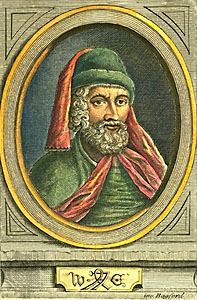
William Caxton (c. 1422 – c. 1491) was an English merchant, diplomat, writer, and printer. He is thought to be the first English person to work as a printer and the first to introduce a printing press into England, which he did in 1476. He was also the first English retailer of printed books; his London contemporaries in the trade were all Flemish, German, or French. -
Wikipedia
While in Italy, Ker saw a first edition of Boccaccio's Decameron, often called the Valdarfers edition. This was a fabled book, which many said did not exist. He paid 100 guineas for it and showed it to his friends in London to huge acclaim. For the next 40 years he collected ancient and curious books, particularly editions of Shakespeare's works and other works which merely mentioned Shakespeare. At his death in 1804 there were 10,000 items. Most were books, but there were also pamphlets and broadside ballad sheets. His library was auctioned in 1812, leading to the formation of the Roxburghe Club. His collection of ballads were later published as the Roxburghe Ballads.
He died unmarried and childless, and the titles Earl Ker and Baron Ker, which had been created for his father in 1722 in the Peerage of Great Britain, became extinct. His cousin William Bellenden, 7th Lord Bellenden succeeded to the dukedom and all of its other subsidiary titles. - Wikipedia
Christophorus Valdarfer was an early printer, active in Venice and Milan in the second half of the fifteenth century. - Wikipedia
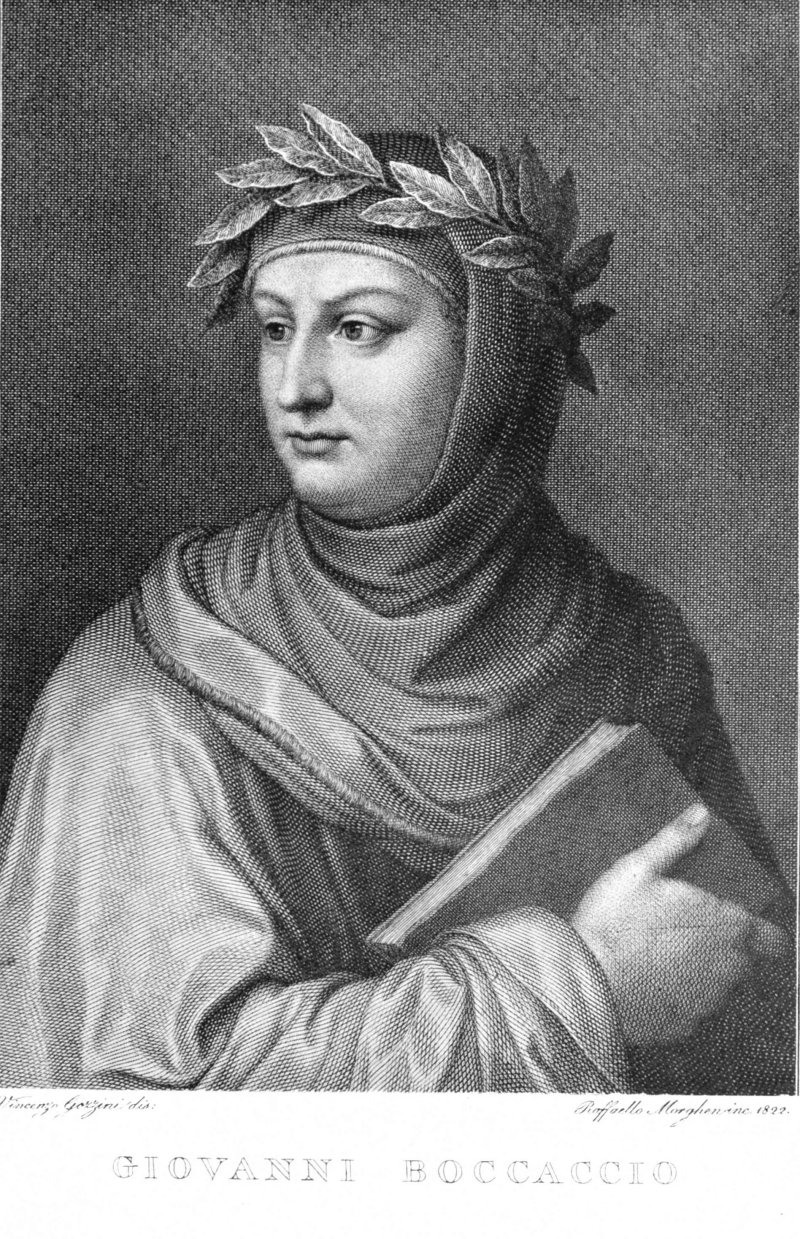
The Decameron . . . is a collection of novellas by the 14th-century Italian author Giovanni Boccaccio. The book is structured as a frame storycontaining 100 tales told by a group of seven young women and three young men sheltering in a secluded villa just outside Florence to escape the Black Death, which was afflicting the city. - Wikipedia


.png)


.jpg)


_-_Robert_Banks_Jenkinson_(1770-1828),_2nd_Earl_of_Liverpool_-_RCIN_404930_-_Royal_Collection.jpg)