Chicago - Saturday In The Park (1973)
MTVArchives
". . . Lamm's dynamic but cryptic "25 or 6 to 4" (Chicago's first Top 5 hit), which is a reference to a songwriter trying to write at 25 or 26 minutes before 4 o'clock in the morning"
Silicon Forest
If the type is too small, Ctrl+ is your friend
". . . Lamm's dynamic but cryptic "25 or 6 to 4" (Chicago's first Top 5 hit), which is a reference to a songwriter trying to write at 25 or 26 minutes before 4 o'clock in the morning"
![]() |
| View of Haarlem with Bleaching Grounds - Jacob van Ruisdael 1665 |
In 1670, the linen bleaching process was a slow, multi-step photochemical method. Centered in places like Haarlem in the Dutch Republic, it required weeks of washing, boiling in alkaline lye, soaking in massive amounts of sour buttermilk, and prolonged exposure to sunlight on open grass fields (bleachfields).
More from Wikipedia:
The success of the linen-bleaching industry in Haarlem had reached its climax at the time that Ruisdael painted this work. There were other linen-bleaching centers in the Netherlands; however, none of these locations were endowed with the perfect mixture of natural resources that Haarlem had. During the seventeenth century, linen bleached in Haarlem was highly sought after and quite expensive; this was the cause of the economic prosperity in Haarlem and the wealth of Haarlem linen merchants. All linen bleached in Haarlem received the name toiles de Hollande, or "Haarlemmer Bleek," which means Haarlem bleach. Regardless of where the linen was woven, if it was bleached in Haarlem it was called toiles de Hollande.
I thought for sure 'wrapped in white linen' is a line in the song Lucky Man by Emerson, Lake & Palmer, but it's not. The line is from The Streets of Laredo by a host or artists.
![]() |
| Virtual Piano |
I wrote a little program in C the other day, and I thought it might be more useful if I rewrote it in Javascript, that way I could post it on the web. It's not a very useful program, more just messing about with numbers, but while I thinking about this it occurred to me that you could use your computer keyboard to play music like a piano. That sounds like a fun project. So yeah, I'm a little late to the party. Several other people have already done this.
Portland’s Salvo Beta Releases New Music for the First Time in Decades by Daniel BromfieldA cochlear implant has inspired Sean Wolfe to try making music in a new way.Salvo Beta, the project of Portland electronic musician Sean Wolfe, just put out its first new music in nearly 25 years. And in order to make it, Wolfe had to learn to hear music in a totally new way.His two remixes of the Chicago band Still Machines’ song “Echoes Within” are directly inspired by his experience with a cochlear implant, or CI—a surgically implanted prosthesis he received in 2024 after losing most of the hearing in his right ear.“There’s basically a wire with a bunch of electrodes, and each electrode only triggers a certain frequency band,” Wolfe explains. “The in-between sounds are kind of weird.”In order to achieve the desired effect on the remix, Wolfe manipulated a Moog synth sound through spectral shaping, a production technique that allows producers to alter individual frequencies. The result sounds something like a bell pinging underwater; the post-punk source material is clear, but the music sounds waterlogged.“One of the things that really kind of shaped how I started making the music is inferring how frequencies can be shifted and perceived by someone like me, who has one of these CIs,” he says.
|
| The City Who Fought - Anne McCaffrey & S. M. Stirling |
Google summary:
. . . a 1993 science fiction novel, part of the "Brainships" series, about a "shellperson" (a disembodied brain) named Simeon who runs a space station and must use his hobby of wargaming to defend it and refugees from brutal pirates. The story follows Simeon and his new, strong-willed human partner, Channa Hap, as they work together to save the station and its inhabitants from the invading Kolnari.
Not the greatest book, but the exploration of the psychological aspects of the characters in the middle section was pretty good. There is a weak attempt at fitting Faster-Than-Light (FTL) travel with local space travel, but why do you need cold-sleep if you have FTL? Yeah, and when you start looking at tactics, you really need details on how this flavor of FTL works, and that is pretty much completely missing. Never mind, all the important characters and important action are going on on the space station.
Some items that caught my eye:
Page 164 paragraph 3 new-to-me word: sicatooth - "... and I want you to start pulling together those tasty goods we're going to use to tempt the ... sicatooth ." Google can't find it. I suspect it means something like a wolf-like attacker, a pirate, for instance.Page 184 new-to-me word: antiphonally - in a manner characterized by the alternation of musical parts in a responsive manner between two groups of singers or musicians
Page 184 also a sex scene without using any sexual terms. Clever.
Page 202 paragraph 6 - a new-to-me term: stranger'n - contraction of 'stranger than' I expect.
Page 203 paragraph 9 - new-to-me word: chatelaine - the mistress of a household or of a large establishmentPage 234 "lost her rag" - all the good people say it means she has lost her temper, but I like this explanation I found on English Language & Usage Stack Exchange
Men have always dismissed women who have lost their temper as losing their rags meaning they were only in a bad mood/short tempered because of their period.
Page 237 paragraph 3 - Another unknown word: precocity - it is just the noun version of the adjective 'precocious' which means 'exceptionally early in development or occurrence'.
Page 249 paragraph 10 - In the last sentence we get some clever invented slang from Joat, a renegade girl, describing crawling around in the station's maintenance access tunnels: "Some of the places pinch grudly but they're in-able if you're sveltsome."
Page 276 paragraph 2 - Hebrides Suite. Hmm, there is The Hebrides, a concert overture that was composed by Felix Mendelssohn in 1830, but there is also Clare Grundman's Hebrides Suite (1962), a popular four-movement concert band work based on Scottish folk songs from the Hebrides Islands.
Page 276 last paragraph - whipped Jersey - Jersey cow cream is so rich that you can thicken it with a few good shakes (as used on an Irish Coffee), and whip it in no time at all. - Foodie Pilgrim
Page 287 and Page 288 fragments of three poems
Page 293 paragraph 8 - Carmina Burana could be a medieval collection of poetry or it might be the a cantata composed in 1935 and 1936 by Carl Orff. Video. Includes O Fortuna. I suspect the cantata is the correct one here.
Page 313 top, fragment of a poem - The Quest by Rudyard Kipling
![]() |
| Kaohsiung Music Center |
![]() |
| Taiwan lies near the junction of two tectonic plates and is prone to earthquakes [File: I-Hwa Cheng/AFP] |
![]() |
| Taiwan |
![]() |
| Martinu: Thunderbolt P-47 |
Hans Kindler was one of the most brilliant and dedicated musicians of his generation. Born in Rotterdam in 1892 and trained at the city’s conservatory, Kindler emigrated to the United States in 1914 to become Principal Cellist of the Philadelphia Orchestra. After serving in that distinguished ensemble for six years, he followed a solo career until choosing in 1927 to devote himself to conducting; the following year he led the premiere of Stravinsky’s ballet Apollon Musagète in Washington, D.C. Realizing that the nation’s capital did not have an adequate permanent orchestra, four years later, at the height of the Great Depression, he founded the National Symphony Orchestra. The venture was a success, and Kindler became an influential advocate of contemporary composers during his seventeen years as the ensemble’s music director.
Early in 1945, when World War II was entering the final phase of its exhausting course, Kindler commissioned Bohuslav Martinů to write a work for the NSO. He could only offer $200 (of his own money) for the job, however, so a short, one-movement piece was agreed upon. Martinů chose to write a high-energy scherzo for Kindler and completed the score during the first two weeks of September (“lots of work for little money,” he grumbled to a friend). He titled the piece Thunderbolt P-47, a tribute to both the pilots of the U.S. Air Force and to Republic Aviation’s eponymous plane, America’s largest, heaviest, most expensive, most durable and most effective single-engine fighter-bomber of World War II. Martinů’s Thunderbolt P-47 follows the traditional tripartite form of the scherzo (A–B–A), though its style embodies a decidedly modern musical evocation of the speed and power of military aviation: the muscular outer sections are driven by strong, repetitive rhythms and full scoring, while the central episode is rather dance-like in mood and lighter in texture.
As you might expect SheetMusicX will sell you a paper copy of the score, all three pounds of it, for $600. Sheet music. Huh. Don't know when the last time I saw a piece of sheet music. Probably in high school. I vaguely remember we had a piano at home, and the bench seat was stuffed with sheet music. I think my mom aspired to play the piano, and she did play a bit, but I don't think she ever mastered it. I, at least, did learn to read sheet music, though I never learned to play an instrument. I learned the mechanics of playing, blow on the mouthpiece, move your fingers up and down, but it never sounded like music to me, and probably not to anyone else either.
![]() |
| Narco Ballad |
The memory of a tune appeared in my mind recently. I can recall the tune, but only vaguely. I am sure that I would recognize it if I heard it again, but do you know how many tunes are out there floating around in the world? Zillions, that's how many.
The tune was a narco ballad that I used to listen to maybe 30 years ago. It doesn't sound anything like the narco ballads that seem to be common on YouTube. Shoot, it's been so long that I may not even remember it correctly and it's just a figment of my imagination. Very annoying.
A narcocorrido is a subgenre of the Regional Mexican corrido (narrative ballad) genre. - WikipediaTDS stands for Trump Derangement Syndrome. It seems to have infected a large portion of the population. People who are so afflicted are convinced that Donald Trump is the devil incarnate and everything he says or does is just more evidence that he is a bad, bad man.
I watched this video short of the Army Chorus performing at the White House. I was curious as to why the poster found this humiliating. It was hard for me to understand the lyrics, but after some rooting around I found them. It's the finale from the Broadway musical Les Miserables.
I looked in the comments to see what people were saying and they all seemed to be suffering from (or enjoying) their TDS.
I'm sorry, I don't see it. I see Trump as the liberator of the oppressed, downtrodden, deplorables from fly-over country. I thought about telling the poster that I disagreed, but you can't argue people out of their religious beliefs. I suspect the only thing that will change their minds will be when the 2 by 4 of reality hits them over the head. That 2 by 4 hasn't hit yet, but it's coming. I hope.
Do You Hear the People Sing?
Do you hear the people sing?
Singing a song of angry men?
It is the music of a people
Who will not be slaves again
When the beating of your heart
Echoes the beating of the drums
There is a life about to start
When tomorrow comes
Will you join in our crusade?
Who will be strong and stand with me?
Beyond the barricade
Is there a world you long to see?
Then join in the fight
That will give you the right to be free
Do you hear the people sing?
Singing a song of angry men?
It is the music of a people
Who will not be slaves again
When the beating of your heart
Echoes the beating of the drums
There is a life about to start
When tomorrow comes
Will you give all you can give
So that our banner may advance
Some will fall and some will live
Will you stand up and take your chance?
The blood of the martyrs
Will water the meadows of France
Do you hear the people sing?
Singing a song of angry men?
It is the music of a people
Who will not be slaves again
When the beating of your heart
Echoes the beating of the drums
There is a life about to start
When tomorrow comes.
The checkerboard pattern in ska music and fashion represents racial unity and a fight against segregation. The pattern was popularized in the late 1970s during the second wave of ska music, also known as the "two-tone" era.
I remember Ska music being sort of popular once upon a time, but I didn't know any Ska tunes, so again I asked Google. This one struck me as 'authentic'.
In the summer of 1967, Desmond Dekker & the Aces’ rude boy anthem, ‘007’ became one of the first Jamaican-produced recordings to breach the UK’s national Pop Singles charts; its unexpected international success prompting an urgent need for material to promote the 7” single.Consequently, Graeme Goodall, MD of Doctor Bird Records, the company behind its British release, hastily secured the services of respected Jamaican director, Perry Henzell, who wasted little time in filming the group live on stage and in the streets of island’s capital before editing the resultant footage and rushing it to the UK, where on the evening on 3 August, it was aired it on the BBC’s hugely popular ‘Top Of The Pops’ TV show.Notable for being one of the earliest promotional music films ever to be created in Jamaica specifically for a global audience, it now not only provides a truly fascinating glimpse of Desmond & the Aces in action, but also of Kingston street life back in the mid-Sixties.
Here's a couple of tunes that I know that are supposedly Ska, but I never would have thought so:
![]() |
| Taylor Swift’s Eras Tour show, Vancouver, CA, Dec 7, 2024 - Carolyn Porco |
One more seismic event that I don't understand. Carolyn Porco (she led the imaging team of NASA's Cassini mission) went to a Taylor Swift concert and then wrote about her experience. I''ve heard a couple of Taylor's songs, but they made no impression on me. I don't even remember what they were, so all this blather about Taylor Swift makes no sense to me. Anyway, evidently Taylor's concert tour was exceptional in every way. Here are some numbers I pulled from the middle of Carolyn's piece.
'Joy Division eh? What's all that about?''The name of a brothel German soldiers used during the second world war'.
In World War II, Nazi Germany established brothels in the concentration camps (Lagerbordell or Freudenabteilungen "Joy Divisions") to increase productivity among inmates. Their use was restricted to the more privileged Aryan prisoners, primarily the Kapos, or "prisoner functionaries", and the criminal element. Jewish inmates were prohibited from using the brothels according to rules against racial mixing. In the end, the camp brothels did not produce any noticeable increase in the prisoners' productivity levels but, instead, created a market for coupons among the more privileged camp prisoners.
The women forced into these brothels came mainly from the women-only Ravensbrück concentration camp, except for Auschwitz, which used its own prisoners. In combination with the German military brothels in World War II, it is estimated that at least 34,140 female inmates were forced into sexual slavery during the Third Reich.
Ka-tzetnik 135633 wrote a book (House of Dolls) about it.
******
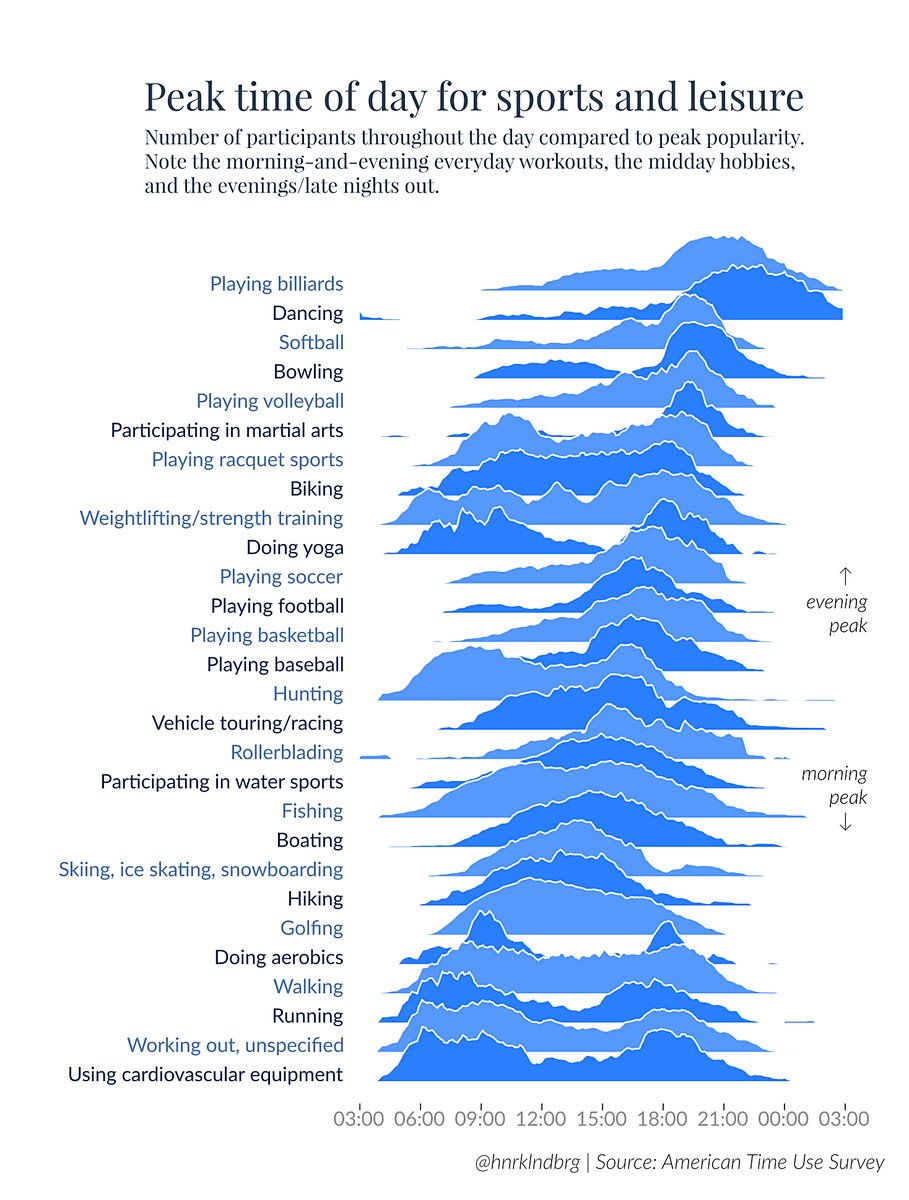
Then I found this post about Joy Plots:
Let’s talk about plots and joy. The Joy of Plots, if you will. Also, Joy Plots.
Henrik Lindberg
coined the term Joy Plot on the weekend
, and it’s quite clever. Not only does it describe a plot of things people enjoy, it’s also a nice reference to
that Joy Division album cover everybody knows
even if they’ve never heard the actual music.