Intel's Ronler Acres Plant

Silicon Forest
If the type is too small, Ctrl+ is your friend

Showing posts sorted by relevance for query yellow fever. Sort by date Show all posts

Saturday, May 21, 2016

Yellow Fever

I'm reading Burglar On The Prowl by Lawrence Block and he mentions William Gorgas, Yellow Fever and Panama, citing him as an example of dedicated tenaciousness, so I gotta go look him up. Gorgas was the third of of trio of medical heroes who fought Yellow Fever. Here is a summary of what I found in Wikipedia.

Model of Yellow Fever Virus
Yellow fever is an acute viral disease. In most cases, symptoms include fever, chills, loss of appetite, nausea, muscle pains particularly in the back, and headaches. Symptoms typically improve within five days. In some cases within a day of improving, the fever comes back. In these cases it can get much worse, and is sometimes fatal.

The disease is caused by the yellow fever virus and is spread by the bite of an infected female mosquito. It infects only humans, other primates, and several species of mosquitoes. The virus is an RNA virus of the genus Flavivirus. The disease may be difficult to tell apart from other illnesses, especially in the early stages. To confirm a suspected case, blood sample testing with polymerase chain reaction is required.

A safe and effective vaccine against yellow fever exists and some countries require vaccinations for travelers. [My daughter got vaccinated when she went to Africa.]

Yellow fever causes 200,000 infections and 30,000 deaths every year, with nearly 90% of these occurring in Africa. Nearly a billion people live in an area of the world where the disease is common. It is common in tropical areas of South America and Africa, but not in Asia. [30,000 out of a billion is, on average, like one person out of 30,000, which can hardly be considered significant. Problem comes when you get an outbreak in one small area with maybe 1,000 people and a hundred people die.]

The disease originated in Africa, from where it spread to South America through the slave trade in the 17th century. In 1927 yellow fever virus became the first human virus to be isolated. Surviving the infection provides lifelong immunity, and normally there is no permanent organ damage.
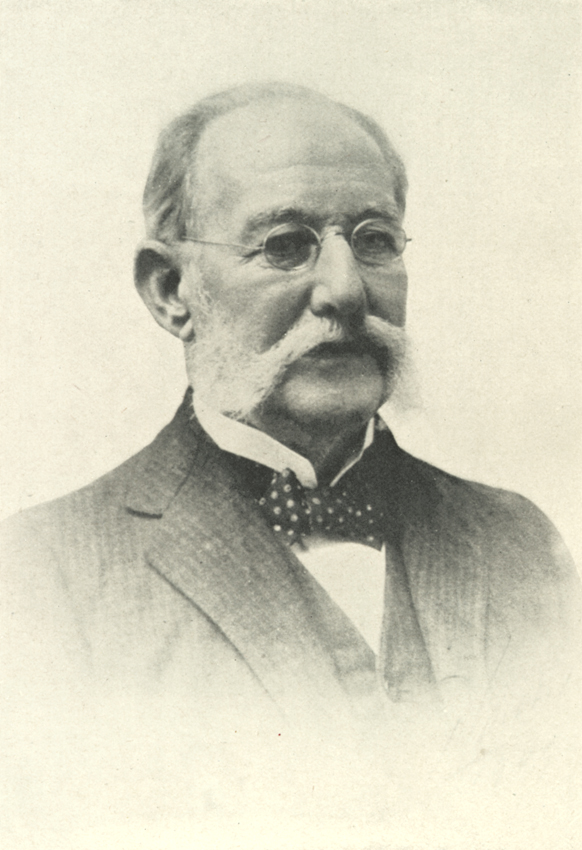
Carlos Juan Finlay (1833 – 1915) was a Spanish-Cuban epidemiologist recognized as a pioneer in the research of yellow fever, determining that it was transmitted through mosquitoes.

He attended school in France in 1844, but was forced to return to Cuba after two years because he contracted cholera. After recovering, he returned to Europe in 1848, but became stuck in England for another two years due to political turmoil, and after arriving at France to continue his education he contracted typhoid fever and again returned to Cuba.
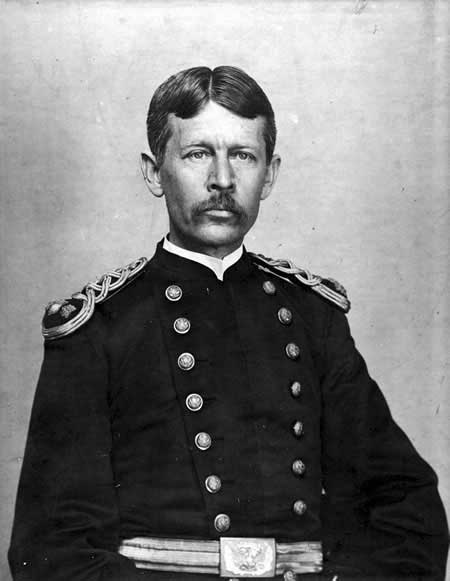
Major Walter Reed, M.D., U.S. Army, (1851 – 1902) was a U.S. Army physician who in 1901 led the team that postulated and confirmed the theory that yellow fever is transmitted by a particular mosquito species, rather than by direct contact. This insight gave impetus to the new fields of epidemiology and biomedicine, and most immediately allowed the resumption and completion of work on the Panama Canal (1904–1914) by the United States. Reed followed work started by Carlos Finlay and directed by George Miller Sternberg ("first U.S. bacteriologist").

Although Reed received much of the credit in history books for "beating" yellow fever, Reed himself credited Carlos Finlay with the discovery of the yellow fever vector, and thus how it might be controlled.
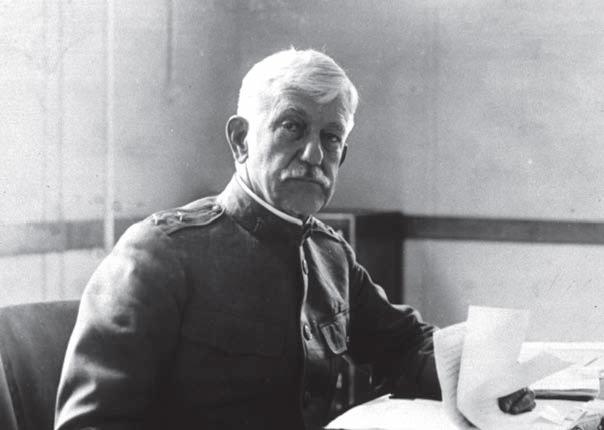
William Crawford Gorgas KCMG (1854 – 1920) was a United States Army physician and 22nd Surgeon General of the U.S. Army. He is best known for his work in Florida, Havana and at the Panama Canal in abating the transmission of yellow fever and malaria by controlling the mosquitoes that carry them at a time when there was considerable skepticism and opposition to such measures.

While at Fort Brown (Texas), he survived yellow fever and met Marie Cook Doughty, whom he married in 1885. In 1898, after the end of the Spanish–American War, he was appointed Chief Sanitary Officer in Havana, working to eradicate yellow fever and malaria. Gorgas built on the work of Major Walter Reed, who had built much of his work on insights of Carlos Finlay.

Tuesday, November 4, 2014

War of Jenkin's Ear

Prince Charles, Camilla, and unknown Colombians unveil a plaque outside the
Castillo de San Felipe de Barajas  in Cartagena, Colombia. The plaque commemorates the loss of 10,000 English soldiers during their attack on the city in 1741.

Salient excerpts from the Wikipedia article:
    The incident that gave its name to the war had occurred in 1731, off the coast of Florida, when the British brig Rebecca was boarded by the Spanish patrol boat La Isabela, commanded by Julio León Fandiño. After boarding, Fandiño cut off the left ear of the Rebecca's captain, Robert Jenkins, whom he accused of smuggling.
    The largest action of the war was a major amphibious attack launched by the British under Admiral Edward Vernon in March 1741 against Cartagena de Indias, one of Spain's principal gold-trading ports in their colony of New Granada (today Colombia).
    Heavy losses on the British side were due in large part to virulent tropical diseases, primarily an outbreak of yellow fever, which took more lives than those lost in battle.
What has this got to do with me? Here with we have a little bit of American history for your amusement:
    British forces included 4,000 recruits from Virginia. They were led by Lawrence Washington, the older half-brother of George Washington, future President of the United States.
    Lawrence Washington survived the yellow fever outbreak, and eventually retired to Virginia. He named his estate Mount Vernon, in honour of his former commander.
The castle is the greatest fortress ever built by the Spaniards in their colonies:

 Which might explain why the English failed to take it. Google Maps failed me. The satellite image of the fortress is so dark it is difficult to tell what you are seeing.

P.S. While the stated reason for the confrontation was smuggling, the real reason was a dispute over who was making money off the slave trade. This was when slaving was still big business in England, Spain and the Americas.

Tuesday, March 26, 2024

Battle of Trafalgar

HMS Victory Copper Bottom

Liz goes for a cruise on the River Tawe and picks up some tidbits:

Three facts from my trip: Swansea has the second biggest tide in the world; the battle of Trafalgar was won thanks to the copper-bottomed boats of the British Navy, the copper having been produced in Swansea; and the only known occasion when yellow fever was transmitted in the UK was when a number of infected mosquitoes travelled to Swansea from Cuba with a cargo of copper ore.

Liz, Swansea and the River Tawe are all in Wales. Have I posted anything about Yellow Fever before? More than I realized. 

Friday, April 17, 2009

Portland Industrial Clinic

Took darling daughter downtown to get her immunizations in preparation for her trip to Africa next fall. The place we went to is an old clinic right on the border between an industrial area and trendy 23rd.

Inside there is a waiting room with 12 people and room for ten. She was there for an hour and a half. I ducked out to find a better parking place, and when I came back I found out that we didn't have any way to pay for the shots, so ducked back out to find an ATM.
Trendy 23rd is one block away, and within a couple of blocks I find a Starbucks. The barista there kindly gives me precise directions to the US Bank, three blocks farther on. There are lots of shops all up and down 23rd, but I picked Starbucks thinking I would have better odds there of finding someone who knows the neighborhood, and I was right, or lucky. So often when I stop and ask for directions and I get someone who barely knows where they are, much less where anything else is. On the way to the bank I notice these two gas meters behind the glass in a flower shop. Never seen gas meters inside before.
Upon agreeing to their $3 charge, the ATM coughs up the requisite $200. $125 for Yellow Fever, $75 for Typhoid. Turns out the Typhoid immunization is not a shot, but four (count 'em, 4!) pills that need to be refrigerated. They give us an ice pack to keep them cold on the way home. A few minutes before we are finally able to leave the clinic a man pokes his head in the door sees all of us waiting in this tiny room, says "God Damn" and "Jesus", and leaves. I have to laugh, it's what exactly what I thought when I first came in the door.
Diagonally across the street from the clinic is this building,
which turns out to be Laika, the home of the movie Coraline.

Update January 2017 replaced missing pictures.

Monday, March 23, 2009

Drug Prices, Part II


Darling daughter is planning on a three month sojourn to Africa next fall, so Mom was arranging for the necessary shots. There's one for Yellow fever for $120, and one for Typhoid for $75, and then there's malaria. For malaria there is no one time shot. You take a pill ever day. The pill of choice is Malarone at $8 a pop. Three months in Africa, plus 3 days before you leave and a week after you return, and we're talking a hundred days, easy. That makes $800 worth of pills. Yowzer!

So I go Googling and what to my wondering eyes should appear but our old friend Doxycycline, which is more on the order of a $1 a pill. The only problem with Doxycycline appears to be "increased sun sensitivity", which is probably not a good idea for a fair skinned person going to Africa.

Update January 2017 replaced missing image.