Russia’s turbulent history has largely been defined by revolutionary change. The past millennium has been siloed into fragmented periods – from the Kievan Rus, the Mongol state, Muscovite Russia, Peter the Great’s Cultural Revolution, the Great Reforms following the Crimean War, the democratic change of 1905, the Bolshevik Revolution of 1917, and the liberal success in 1991. The fragmented history has been disruptive and destructive as each period made a break with the former. The enduring legacy has been competing visions of Russia’s future and the reliance on authoritarian governance for stability.
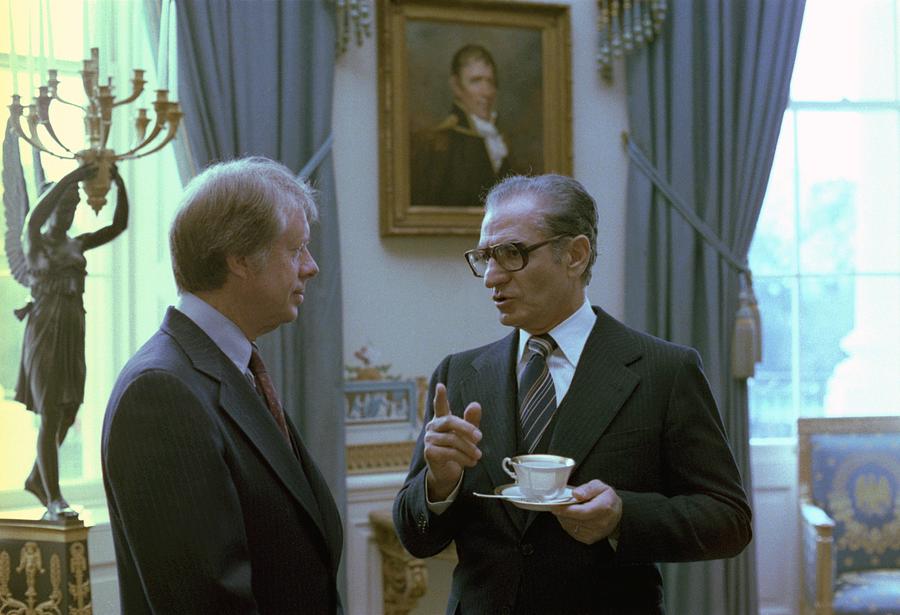
There is a notion that superpowers have, well, super powers, and can bend history to their will. There is never a shortage of conspiracy theories involving foreign agents. The reality of course is that even great powers are constrained, and the idea that Carter's appearance in Iran sparked a revolution is at the very least too Carlylian for my taste. If Carter had a role to play, I would say that his administration placed too much faith in the shah's government, then was indecisive in its support. Carter managed to disappoint reformers even as he failed to provide unambiguous support for the-devil-we-know, and left the regime to its devices in the critical year of 1978 while his administration focused on SALT II and the Camp David Accords. Ultimately, forces in Iran, not a few provoked by the shah himself, are responsible for what followed. The OP refers to New Year's Eve 1977. On a 16-hour visit, Carter became the first and only U.S. president to visit Iran, and at dinner made an infamous toast: Iran, because of the great leadership of the Shah, is an island of stability in one of the more troubled areas of the world. This is a great tribute to you, Your Majesty, and to your leadership and to the respect and the admiration and love which your people give to you. The transformation that has taken place in this nation is indeed remarkable under your leadership.* With that, Carter seemed to dash hopes that his administration would put real pressure on the shah, while at the same praising the very policies which had angered much of the Iranian public— inviting the scorn of the liberal, Marxist, and Islamist opposition alike. But to claim that this was the spark of the revolution is an overstatement. In the early 20th century, as Persia was caught in the endless machinations of the British and Russian empires as they jockeyed for position, the U.S. may have been seen as a potential third power which would put a stop to the meddling. But the U.S. had no interest in Iran (it was cultivating influence with the Saud family on the other side of the Gulf) until after World War II, when Cold War politics came to dominate foreign policy. It was vital to keep the largest and wealthiest state in the Middle East out of the sphere of the Soviet Union. American and British involvement in the 1953 coup d'etat against the Mossadegh government was widely suspected, and later confirmed to be true. Mohammed Reza Pahlavi by all accounts proved to be soundly anti-communist and pro-Western ally. To the West, he was abolishing feudal institutions, industrializing the economy, and secularizing Iranian society. The U.S. even curtailed intelligence-gathering in Iran in the 1970s, trusting his government to supply it. Internally, however, the shah managed to alienate large segments of the population with increasingly arbitrary rule (e.g. replacing the calendar): first clerics and landlords in the White Revolution of 1963, then the intelligentsia, and after he tried to blame the souring economic conditions of the 1970s on merchants, both the commercial classes and the unemployed. The Carter administration did admonish the shah on human rights concerns early on, resulting in the token release of some political prisoners, but public protests began months before Carter's visit. Mustafa Khomeini, son of Ruhollah Khomeini, was killed while in exile in Iraq in 1977. The shah's secret police were widely believed to be responsible, leading to protests and a harsh crackdown. Secular intellectuals issued a challenge in October 1977, and citing this letter, Khomeini encouraged clerics to step up their opposition citing the letter. So the protests of January and February 1978 were the culmination of years of resentment against the regime, its secret police, and its propaganda machine, not a spontaneous critique of American foreign policy. Some do blame Carter for later events. He had been elected partly on the promise of a government that practiced its high ideals. In contrast to the realpolitik that led previous administrations to turn a blind eye to human rights issues and social justice, his would not intervene in the affairs of other countries, and would take an active interest in disarmanent and peace. At the same time, however, Carter had the reality of serving a superpower's interests during the Cold War, in a period when the West had seen a succession of humiliations in Southeast Asia and Africa, and the U.S. was reeling from Watergate, Vietnam, and stagflation. These competing interests played out at the very top of the administration. From the early months of the crisis, Zbigniew Brzezinski, the National Security Advisor, advocated for ardent support of the shah as in the best interests of the U.S. The State Department under Cyrus Vance (and the U.S. ambassador, William Sullivan) believed that the shah was a lost cause, and that supporting democratization would serve U.S. interests better. By February 1979 Iran was in a state of civil war, but the U.S. dithered. Brzezinski was assuring the shah of unwavering support, the State Department was reaching out to the liberal opposition to try to smooth transition to a democratic government, but the government refused to support a coup d'etat or other action that could have replaced the shah with someone other than Khomeini, much less any direct military intervention. When the shah was admitted to the U.S. for medical treatment in October, students stormed the embassy and published documents showing that U.S. officials had met with moderate leaders. This helped turn public opinion against the moderates and raised fears of direct U.S. intervention, which Khomeini extracted for maximum propaganda value for years to come. choster August 16, 2012
I find it curious that any number of countries can build nuclear bombs and ICBM-s, but cannot build a decent jet engine, and by decent I just mean one that will hold together for some number of hours. The pumps used in liquid fuel rockets are essentially jet engines, but they only have to run for ten minutes or so. When the Germans introduced the Me-262 jet fighter towards the end of WW2, the engines only lasted 20 hours before they need to be overhauled. A duration of hundreds of hours, or even thousands of hours, would be preferable for an aircraft engine, but if 20 is all you've got, well, you make do. But nobody outside of the big six is even doing that, or if they are, they aren't telling anybody. I dunno, maybe they think 20 hours isn't anything to brag about.
If I built a jet engine that ran for 20 hours I would be pretty proud of myself. Of course my neighbors would probably have me shut down for disturbing the peace if I let it run more than about ten minutes.
Anyway, I decided to look up this Ukrainian outfit. There seem to be two of them, both in the same city (Zaporizhia), both building the same thing. I'm reading a short history of Lutsk Repair Plant "Motor" that lists four or five moves during WW2. Think maybe the invading Germans had something to do with that? In any case, they mention how they supplied aircraft for the battle at Voronezh, which I had never heard of. Seems the Germans used it as a big staging area for the battle of Stalingrad.
Voronezh is near the top center. Azov is not shown, but is just downstream from Rostov on the Sea of Azov. Google Maps does a poor job of showing rivers.
Voronezh looks like a really weird place to build big sailing ships being as there is no open water for hundreds of miles. All there is is the River Don, and it looks like you have pert near a thousand miles of river to traverse before you get to Azov and your fight with the Turks. One description of the battle mentions galleys, which are just big rowboats, which would make a lot more sense on a river. But hey, who am I to complain if Pete wants to sail giant square rigged sailing ships down the river?
He mentions Elektrozavodskaya, which meant nothing so I looked it up and found there is a very fancy metro station with that name, hence the above image.
He comments on a phrase used in the show: Fille danke is a bastard phrase - fille is French for girl and danke is German for thank you. Vielen dank is German for 'many thanks'. Why are we using German here? Maybe he's trying to make it intelligible to English speakers. 'Many thanks' in Russian is большое спасибо, which is gibberish to me.
The video starts with laying out the groundwork and that part is pretty good, but then he gets into the nuts and bolts of the problems and my brain started going numb, so I copied the transcript and pasted it here. It came out as one big block of text, so I spent some time cutting it up into paragraphs.
Transcript:
California has the largest economy in the United States with a Gross State Product of over four trillion dollars. If it was its own country, it would have the world's fifth largest economy, behind Japan and ahead of India. California is home to some of the world's most valuable technology companies, it’s the center of the global entertainment industry and its farms are amongst the most productive in the world, growing over half of Americas vegetables, fruits, and nuts.
California’s workers are hugely productive too, the state has a GDP per capita of $104 thousand dollars which would rank it as number six in the world – if it was a country. Tax havens (which California definitely is not) often have distorted GDP as multinational companies frequently transfer intellectual property assets to tax havens – like Ireland - which get counted as that countries GDP. Income on foreign owned capital held in a tax haven also gets counted as GDP because the income originates in that country – even if the financial firm has nothing but a PO Box to show for it.
If we exclude tax havens from the list – to remove these distortions - California really stands out as the most productive place in the world. Unfortunately, some of the shine has started to come off of the Golden State in recent years as companies and workers have been leaving. Elon Musk famously announced this summer that he would move the headquarters of his companies from California to Texas. He has long complained about overregulation and excessive taxation in California but said that the final straw was a new law relating to parental rights.
Critics argued that Musk was attacking the state after years of benefiting from its abundant government support – which was of course paid for by the high taxes. The president of the California Labor Federation told the LA Times that “California, through tax credits, electric vehicle subsidies and training grants made Elon successful.” It’s not just Elon Musk however, companies like Chevron, Hewlett-Packard, Palantir, and Charles Schwab have all left the state in recent years.
According to the Financial Times, over 200 companies have left California since 2019 with very few companies moving there to replace them. This contrasts with states like Texas and Florida where the exact opposite is happening. This isn’t all that new either, research from the Hoover Institution shows that this trend began well before the pandemic and has been slowly picking up pace. They point out that corporate relocation planning takes years, giving the example of the NHRA who left California in 2021 after a twelve-year study.
According to Joseph Politano at the Bureau of Labor Statistics, the biggest beneficiaries of the post pandemic move have been States like Texas and Florida, whose economic growth has outstripped most emerging markets in recent years with huge jobs growth too. Now, it’s worth noting that despite all of this negativity, California has been growing faster than the United States overall, and the United States has experienced great economic growth in recent years, but as Texas and Florida have grown, so have jobs, but in California there has been economic growth paired with very weak jobs growth – which is a problem.
The US unemployment rate sits at 4.1%, which is not far off its low, but in California, the unemployment rate has risen to 5.3%, the highest of any US state. The recent tech and AI boom has been good for California, but not for Californians. According to the LA Times, California’s homelessness problem – which has always been an issue has grown by 40% over the last five years and half of all homeless people in the United States live in California.
So, how is California different from the rest of the United States, how did they go from a hundred-billion-dollar budget surplus two years ago to a budget crisis with a $73 billion dollar deficit today? And what explains the Californian exodus, and lack of new arrivals?
Advertisement:
Before we get to that, let me tell you about today’s video sponsor DeleteMe. DeleteMe is a subscription service that acts on your behalf to force data brokers to delete any of your personal data that they are selling online. Data brokers collect huge amounts of personally identifiable information on individuals that can include your Social Security number, birthday, past and recent addresses, information about your relatives, and much more which they then sell online, sometimes to scam artists. Data brokers are required to delete any information they store on you if you ask, but unfortunately there are hundreds of data brokers, and they don’t make it easy. It could take forever to contact them all. I used DeleteMe to reach out to the hundreds of data brokers on my behalf to request the deletion of my personal data, and to deal with any objections. With a yearly subscription DeleteMe regularly tracks to make sure that they don’t re-add your data to their lists. Get 20% off DeleteMe US and UK consumer plans when you go to joindeleteme.com/BOYLE and use promo code BOYLE at checkout.
Early settlers mistakenly believed that California was an island – entirely separated from the United States by the Gulf of California. In many ways it developed like an island too with its major population centers all on the coast - as it was cut off from the rest of the United States by huge mountain ranges and hard to cross deserts. Before rail and good roads were laid the easiest route from the East Coast to California was by sea.
The state’s modern economic history began with the Gold Rush in 1848, which attracted over 300,000 settlers, boosting the population and infrastructure which led to statehood two years later in 1850. The oil industry played a significant role in the state’s early economic development too, after oil was discovered in Los Angeles in 1895. California quickly became the biggest oil producing state up until 1936 after which reserves became depleted. Today oil and natural gas are mostly imported into California from abroad – which partially explains the States high energy costs.
Agriculture has been a huge industry in the state too, with Californian farmers focusing on the production of the highest margin produce. The film industry is possibly what California has been most famous for around the world, and along with the tech sector, it contributes significantly to California's global cultural influence – which has been huge. The development of Silicon Valley in the late 1970s transformed California into the global leader in technology and innovation – which it remains to this day.
Given the size of the State economy, it is no surprise that there is also a vibrant financial sector too. California’s public universities are ranked amongst the best in the world for academic excellence, research and innovation. They attract top-tier faculty and focus on research and development which has driven advancements in technology, medicine, and the arts.
The top Californian universities have policies in place that encourage students to take ownership of their research. Students are often given the opportunity to be named on patents they developed and are supported by the universities in commercializing their work. The UC system has resources like technology transfer offices and entrepreneurship programs to help students navigate intellectual property rights and develop their research into marketable products or services.
At other universities, the ownership of research and IP might be more strictly controlled by the institution itself, many universities retain ownership of all IP created by students, faculty, and staff. The UC system's policies have fostered a sense of ownership, empowerment and entrepreneurship among students and can be given credit for a lot of the innovation and business success that has come out of the state.
California is famously America’s most left leaning state, earning it the nickname “The Peoples Republic of California” – and making it the whipping boy of conservatives, for whom California has long been shorthand for everything wrong in the country.
The State is home to many of America’s most progressive policies, it has the heaviest tax load in the country. Criminal justice policies like de-carceration, de-prosecution, and de-policing (these are all new words to me) have led to a crime problem that has damaged the state’s image along with residents feeling of safety.
Energy prices which are high to begin with in California are likely to only rise higher as the state mandated transition to a zero-carbon grid takes conventional power offline and replaces it with more expensive green sources.
According to research from George Mason University, California is the most regulated state in the US with more than 419 thousand restrictions in place, the majority of which cover “industry, commerce and development”. This overall combination of high taxes, high regulation, high crime and an extreme homelessness problem makes California an easy target for right-wing politicians, and as the situation gets worse – outsiders rush to declare it a “failed state”, or announce that “the California dream is turning into a nightmare”. – I should probably use one of those as a video title… - or something about – checking out of the Hotel California – you guys will click on that… hopefully… The cost of housing and energy are so high in California – when compared with the rest of the United States that even high incomes look a lot less impressive once adjusted taxes and the overall higher cost of living.
The price-to-income ratio for buying homes is twenty-five times median income in Newport Beach, nineteen times median income in Palo Alto, twelve times in San Jose and 11 times in San Francisco, this compares to a national average of 5.6 times for the overall United States, according to researchers from Harvard. According to The Hoover Institution, headquarters migrations out of Santa Clara, Alameda and San Mateo counties reflect high-tech companies in the digital and social media world opting for less expensive locations not only to control business costs but so they can recruit workers who will benefit from lower housing costs in other States.
California’s three greatest challenges today are rising unemployment, growing fiscal strains and population outflows, all of which relate to each other and don’t have easy solutions. In the United States overall the unemployment situation is quite good, with an unemployment rate near its long-term lows and with 1.6 job openings per unemployed person.
In California, the situation is a lot worse, unemployment rose more than in any other state since interest rates were hiked in 2022 and there are just 0.8 job openings per unemployed person—the worst ratio in the country. Big Tech, which had hired aggressively during the zero-interest rate environment, began laying off staff a few years ago as soon as they experienced a slowdown. These layoffs affected the overall Californian economy – not just tech, as when laid off tech workers stopped spending it affected retailers, restaurants, transport and service workers too.
With the slowdown, California’s income-tax collection fell by 25% last year, a drop equivalent to the decline that happened during the bursting of the dot com bubble in 2000 and the global financial crisis in 2008. California’s State Constitution requires a balanced budget in that, if proposed spending exceeds estimated revenues, the Governor has to recommend the sources to make up the budget shortfall.
Governor Newsom projected a deficit of $38 billion dollars for this fiscal year but the Legislative Analyst’s Office, a nonpartisan fiscal adviser for California’s legislature has estimated that the state is on track to spend 73 billion dollars more than it brings in in taxes. This is quite an about turn as just two years ago the state had a 100 billion dollar budget surplus.
The reason California’s budget fluctuates so wildly is that California has a very progressive tax structure, where higher earners pay a much larger share of taxes. When the state’s highest earners do well, the state budget does well – like in 2022, but during business slowdowns tax revenues dry right up. This volatility in tax collections explains why every few years California has a major fiscal crisis.
Governor Newsom defends this setup, saying that it creates a lower tax burden on low- and middle-income workers, but the problem is that the policies are pro cyclical, meaning that when the state needs to spend money – during a slowdown – it has no money to spend and instead needs to cut back.
It’s not obvious that cutbacks on government programs – that are most relied on by low income workers during downturns benefits them. Solutions that have been put forth for dealing with the current budget deficit include deferring promised funding—for universities, the homeless and the disabled. In prior budget crises Californian politicians have played games like pushing payments out an extra day so that they come out of the next years budget or paying IOUs to businesses, students and taxpayers to whom it owed money. None of this fixes the core problem.
The LA Times writes that despite what people believe, overspending is only a small part of California’s problem, they say that the state’s fiscal headache is largely the result of an unstable state tax system that relies too heavily on the rich. For decades, California’s revenues have been heavily dependent on capital gains taxes on the richest residents. Thus, revenues spike in years when the stock market booms as a lot of IPO’s occur and investors sell stocks and other assets.
For example Facebook’s IPO in 2012 brought in an extra 1.3 billion dollars in state taxes. The problem is that in years with an IPO drought, insufficient taxes are collected to keep government programs running As an example, in 2021, the top one tenth of one percent of Californians paid almost thirty percent of all state income tax.
The problem with relying on such a small number of people for such a large percentage of state taxes is that if they choose to leave the state, the tax revenue dries right up. A famous example of overreliance on top earners was in 2016 when New Jersey’s wealthiest resident moved to Florida, throwing the New Jersey State budget into chaos as hundreds of millions of expected revenues evaporated. This is already a problem in California, the State has been losing a growing number of high-earning residents, with the trend picking up pace during the pandemic. In 2021 – according to The Economist - the state lost almost $30 billion dollars in net taxpayer income to other states – as wealthy taxpayers relocated.
California was not always set up like this. In the 1950’s income tax made up only 10% of California’s general fund and sales tax – which is much more stable - was the main revenue source. Since then, California has become much more of a services-based economy and is one of the few states that doesn’t tax services.
Tim Hartford wrote an article this week on some of the strange taxes that have been introduced throughout history like Peter the Great’s beard tax, whose aim was to encourage Russian nobles to shave or Argentina’s bachelor tax which brought about a new profession “the lady rejecter” where women would charge men a fee to write a letter stating that the man had proposed marriage to her and that she had declined the offer. The fact that the man had tried but failed made him exempt from the tax.
Hartford – who was writing about the UK and not California argued that it often works better – when a government needs to raise revenue - to broaden the tax base - while lowering the tax rate at the same time rather than to single out small groups to tax. This is possibly more the case for a state than a country – as it is easier to move to a neighboring state in the United States than it is to move country.
The Economist points out that there is nothing new about more Americans leaving California than move there – they say that this has been going on for over thirty years, but they point out that something else has changed. California’s population still grew over that period because of foreign immigrants arriving there to work. A slowdown in immigration to California from abroad that started during the pandemic has sustained and California has now seen an outright decline in its population for three straight years, the first sustained drop since becoming a state in 1850.
California’s reliance on capital-gains taxes limits the state’s flexibility to fix its budget crisis as hiking taxes further could just drive more rich Californians to leave, exacerbating the problem. According to the Hoover Institute California has hit a wall where the State can’t bring in any more tax revenue without significantly damaging the economy. California’s state income tax rate is amongst the steepest for wealthier people in the United States, topping out at 13.3% for millionaires, and its gasoline tax of almost sixty cents per gallon is the nation’s highest.
While California’s taxes are very progressive, hitting the wealthiest the hardest, the public policy institute of California reports that seventy percent of Californians still feel that they are paying more than they should in state and local taxes. Most taxpayers weigh up what they get in terms of public services for their tax money, and with high crime and extreme levels of homelessness many Californians don’t feel they get any additional public services that are not available in low tax states. They simply feel that they are not getting value for their money.
The one area where the state’s tax collections are lower than in other states is property tax. Proposition 13, which was adopted by California voters in 1978, requires that properties be assessed at market value at the time of their sale, and after that assessments can’t rise by more than 2 percent per year until the house is sold again.
This means that in a situation where property values increase by more than 2 percent per year (which they have in California), homeowners are incentivized to stay in their original home rather than move as their taxes are lower than they would be in a different house of the exact same value. This distorts the Californian real estate market and the data shows that Californians tend move house a lot less than Americans in other States.
This rule benefits wealthier older residents at the expense of new home buyers. The people who have left California cite high taxes, expensive real estate, crime, homelessness and overregulation as the reasons they decided to move to other states. So, how bad is the regulatory environment in California? We saw earlier that California has the most regulation of any state in the US by a significant margin, but the same report showed that Texas – a state that people are leaving California for is number five on that list – which doesn’t seem a whole lot better.
According to The Pacific Research Institute, California doesn’t just have more regulations than other states, but the regulations are more restrictive than in other states too. The report argues that California’s regulatory environment is particularly difficult for small businesses that lack the scale to efficiently manage the administrative burdens and finance the higher costs created by onerous regulations.
According to the Bureau of Labor Statistics – a big reason for the migrations we have seen out of states like New York and California to states like Florida and Texas is that the pandemic weakened the economic clusters that dominated pre pandemic America. Pre pandemic, 19% of all tech jobs were based in California, today only 16.5% are.
It’s not just tech jobs that are moving out of state either, according to The LA Times, film and TV workers are leaving too. During the pandemic when work could be done remotely people moved to more affordable locations. This happened right as the tech industry was booming, which just meant that California had a smaller slice of a growing pie – everything seemed fine. Once the tech recession occurred as interest rates rose, California was just losing outright – with a smaller slice of a smaller pie.
Technology stocks today make up just under one third of the value of the S&P 500 Index. If you add in communications services stocks, many of which connect with the technology arena, the group represents more than 40% of the overall stock market. On top of this there are lots of huge privately owned tech firms too.
The growth of the tech sector has been a huge contributor to Californian growth over the last sixty years, but people are starting to question if these companies can continue to grow – from their already massive size - going forward. The tech sector is well suited to California – as it relies on small numbers of highly paid workers to design products or software that are really scalable.
Unfortunately for the state – you wouldn’t really manufacture physical products there due to the expensive real estate, high regulation and high taxes. There is a reason that every Apple product says Designed in California, Made in China and Taxed in Ireland on the back of it… If the tech industry stops growing – the state might struggle.
Tech layoffs have been hitting California quite hard over the last two years – I made a whole video about this a few months ago, and while Californian tech workers receive the highest average tech pay of any US state they have not only been hit the hardest with layoffs but also withstood the largest year-over-year pay drop when they find new jobs, as demand for their skills has dried up.
Since the gold rush, California’s economy has been built on ready access to fresh water. The state’s agriculture sector faces significant water challenges today due to prolonged droughts and over-reliance on groundwater. California's water reservoirs are often well below average capacity today, leading to stringent water use restrictions. This puts a lot of strain on the agricultural sector, which is vital to California's economy, and once again, there is no obvious solution to this problem.
California clearly faces a number of challenges, and its economy today is suffering in ways that the overall US economy is not, but California has had rough patches in the past, like in the early 2000’s and in the wake of the Credit Crunch, but its innovation-led growth model has managed to stand the test of time. The state made up 14% of America’s total output last year, up from 12.5% in the late 1990s – there is no need to count the state out yet…
The biggest problems appear to be unaffordable housing, excess regulation and a procyclical tax system that finds itself in crisis every few years. The unaffordable housing problem is driven by a combination of excessive regulation and Nimbyism which combined make California the most difficult part of the United States to build new housing in.
Fixing this problem – would likely fix a lot of California’s other problems. It is worth noting that the states that people have been moving to – the ones experiencing the fastest growth are also the states with affordable housing where it is easy to build. Workers like living in places where they can afford a comfortable home, and employers like hiring in these places as workers with affordable homes are willing to accept lower pay. You don’t really benefit from high pay – if it all goes out the door in housing costs.
So, can all of California’s problems be blamed on progressivism? After all Californian refugees have been moving to states where there are no state income taxes, to states with lower regulation where it is easier to build or to places where crime rates are lower than in the Golden State.
Janen Ganesh made an interesting point in a recent FT article on the balance between the right and left arguing that the governing climate in which urban life flourishes is a blend of progressive ideas (such as liberal immigration rules and infrastructure spending) with conservative ideas (like market incentives and toughness on crime). He argues that while cities might benefit most from low taxes, less burdensome regulation and a business-friendly atmosphere, they often vote for policies that would harm them.
California has been a hugely successful economy because of its ability to attract in the best and brightest, and if these people are starting to move away for greener pastures, it might be worthwhile mimicking some of the qualities of the states that are attracting them away. If you found this video interesting, you should watch my video on what’s driving tech layoffs next.
Advertisement:
Don’t forget to check out our sponsor DeleteMe using the link in the video description below.
In this season of relentless kindness, envy is often sadly neglected. Which is why we bring you the First Annual Jealousy List, a compilation of the great pieces of journalism in 2013 that left Bloomberg Businessweek’s staff sick with resentment. Besides functioning as a very long “Bah, humbug,” it’s also a useful guide to the best work of the year by our peers at other news organizations. May they all receive a lump of coal—along with the satisfaction of a job well done. —Josh Tyrangiel
“Blood Spore”
Hamilton Morris’s great murder whodunit and character sketch for Harper’sincludes great paragraphs like this: “Undeterred, I moved on to Pollock’s girlfriend Mitzi, but her exact location was difficult to ascertain as she had just been released from prison after serving a ten-year sentence for intoxication manslaughter. Following Pollock’s death she had succumbed to opioid addiction, lost a suit against Pollock’s estate to recover kitchen utensils and stereo equipment she claimed were her rightful property as his common-law wife, and finally, while driving her Saturn under the influence of methadone and Xanax, decapitated a pedestrian.” —Evan Applegate
“Arendt & Eichmann: The New Truth” “The Defense of a Jewish Collaborator”
One of my favorite writers is Mark Lilla, a Columbia professor of the humanities, who writes for the New York Review of Books, among other outlets. His understated brilliance makes me jealous every time. His most recent pair of articles, on Hannah Arendt, Adolf Eichmann, Jewish collaborators, and the nature of evil, are typical envy-provokers. How can one guy know so much about so many different things and write about them with such confidence, verve, and common sense? —Paul M. Barrett
“Here Is What Happens When You Cast Lindsay Lohan in Your Movie”
Stephen Rodrick’s New York Times Magazine story about the making of a trashy, microbudget film noir by writer Bret Easton Ellis, director Paul Schrader, and human train wreck Lindsay Lohan promises plenty of drama and dysfunction, and this story certainly delivers that. Schrader’s desperate ingenuity in dealing with disaster after disaster also, however, makes it read like a demented and particularly affecting entertainment-industry management case study. —Drake Bennett [+1 from Jim Aley: "Shooting fish in a barrel so memorably and flawlessly is no small accomplishment."]
“Harper High School, Part One and Part Two”
In February, This American Life devoted two episodes to Chicago’s Harper High School, where 29 kids were shot last year—not in one mass shooting, but in a steady stream of violence. Three reporters spent five months inside the school, recording the lives of students and staff as they pay tribute to deceased friends, attend pep rallies, and explain why they try to stay inside as much as possible. It is a feat of immersive reporting. —Emily Biuso
“Nick Saban: Sympathy for the Devil”
Warren St. John’s September profile of Alabama football coach Nick Saban in GQis a case of great access granted to the right person. The details are funny and sharp—”For breakfast, he eats two Little Debbie Oatmeal Creme Pies”—and expertly arranged into a convincing, human portrait of a man usually painted as a cartoon hero or villain. —Ira Boudway
“Rob Ford in ‘Crack Cocaine’ Video Scandal”
I’m jealous of Robyn Doolittle and Kevin Donovan, who broke the Rob Ford story for the Toronto Star. Back in May, Ford was just a hard-drinking mayor who was prone to gaffes. Then they got the video of Ford smoking crack. That’s the kind of tip that should bring down a politician. The fact that it hasn’t is a story in itself. —Diane Brady
“Merchants of Meth: How Big Pharma Keeps the Cooks in Business”
Drug industry lobbyists are undercutting efforts by law enforcement and prosecutors in 25 states to make pseudoephedrine—a cold-and-allergy-medicine decongestant and key ingredient used by small-time shake-and-bake meth lab operators—a prescription drug. This is a great and richly reported dispatch from the war on meth addiction in Appalachia and the rural Midwest—and I resent Jonah Engle and Mother Jones for telling it. —Brian Bremner
“Top Reviewers on Amazon Get Tons of Free Stuff”
Lisa Chow investigates the world of Amazon consumer reviews for Planet Moneyand finds that the top reviewers aren’t quite normal consumers: They are mini industries unto themselves, plied with small amounts of glory and tons of free merchandise. Is this a good thing or a bad thing? Maybe. —Joshua Brustein
“How Janet Yellen Should Embrace the Fed’s Dissenters”
I love almost everything Reuters’s Felix Salmon writes, so it was hard to pick just one. I chose this because it was on my beat and about the length of one of our posts, making it enviable for its content and its discipline. —Peter Coy
An Iranian Qadir light submarine and a hovercraft in Persian Gulf waters in late November, 2012.
Azerbaijan wants to buy a submarine or two. Azerbaijan? Isn't that one of those land locked countries over in Stan-land in Central Asia? Well, yes and no. It does have some water front property, but it's on the Caspian Sea, which everyone knows is just a big lake. Okay, it's a really big lake: 700 miles North to South, 200 miles East to West. It is five times as big (in area) as Lake Superior. Since they do have some waterfront, I can see them wanting to have some kind of Navy, but supposing they did buy a sub, how the devil would you get it delivered? The Caspian Sea is a closed system, it doesn't connect to any oceans. Well, yes and no. Paraphrasing Wikipedia:
Lenin Volga–Don Shipping Canal is a
canal which connects the Volga River and the Don River at their closest points. Opened in 1952, the length of the waterway is 63 miles. The canal forms a part of the Unified Deep Water System of European Russia. Together with the lower Volga and the lower Don, the Volga–Don Canal provides the most direct navigable connection between the Caspian Sea and the Sea of Azov, and thus the world's oceans.
...
The actual construction of today's Volga–Don Canal began prior to WW2, which would interrupt the process. From 1948 to 1952, construction was completed; navigation was opened 1 June 1952. The canal and its facilities were predominantly built by prisoners detained in several specially organized
corrective labor camps. In 1952 the number of convicts employed in construction topped 100,000.
I sometimes forget the scale of the map I see using Google Maps. The section of the Volga River below Volgograd looks like a thin little line when in fact it is a half mile wide channel.
As long as you are on good terms with Turkey and Russia, you can get big ships, including submarines, from the world's oceans into the Caspian Sea.
This is the same part of the world where Peter the Great was fighting the Turks.
Exposing a Nearly Invisible Conspiracy to Control the World’s Food and Water
Gabriela Cowperthwaite uncovers a massive global scheme to gobble up resources, pairing with the Center for Investigative Reporting to bring these shadowy operations to light.
You’ve heard the expression, “There are only nine meals between mankind and anarchy.” Well, The Grab makes the case that society had best brace itself for disorder, since certain parties are gobbling up the world’s food and water resources while the rest of us are distracted by other things. Produced in association with the Center for Investigative Reporting, Blackfish director Gabriela Cowperthwaite’s astonishing, eye-opening doc hits us with the idea that the next world war won’t be fought over ideology, oil or border disputes, but basic resources like meat, wheat and water, none of which should be taken for granted.
Experts call this field “food security,” and the entire system is more fragile than it looks. World populations are climbing while water resources are dwindling, which has led countries such as Saudi Arabia and China to seek farmland on other continents. Among its myriad examples, The Grab focuses on a 15-square-mile expanse in La Paz, Ariz., an arid desert locale where there’s no limit to the amount of water landowners can pump from the aquifers. Arizona’s policy of unrestricted access means Saudi investors can legally tap into the water table to grow fields of hay, which will be shipped home to feed their cattle, even if it means draining the wells of local farmers in the process.
It’s the same principle described at the end of There Will Be Blood, when a triumphant Daniel Day-Lewis crows, “I drink your milkshake!” Only now, it’s H2O, not oil, that’s at stake. Versions of the same thing are already happening all over the world (not that Americans should pretend for a second that they’re not among the culprits of the global resource snatch). A good part of what makes The Grab so alarming is the reminder of what’s being done to satisfy your own consumer comfort.
For years, the West had a virtual monopoly on this phenomenon: Colonialism has historically been less about taking care of foreign peoples than about taking control of their resources. And now, other countries — like fast-growing China — are looking for a piece of the proverbial pie. The Grab points to the Great Chinese Famine and the Arab Spring as examples of shortfalls that reshaped nations, and suggests that world leaders must anticipate their people’s food and water needs if they hope to stay in power.
Want to understand the reason Vladimir Putin invaded Ukraine? Look no further than the besieged country’s status as supplier of 29% of the global wheat trade. Russia already took a big bite of the country in 2014, to which Ukraine responded by cutting off water to Crimea. It’s no coincidence that Russian forces occupied the canal on day one of their latest offensive, destroying the dam blocking water from the Dnieper River. (Not upset enough about Putin? Just wait’ll you hear why global warming is a good thing to a country that sees usable ranch land under areas of ice.)
Simply repeating the film’s points makes one sound like some kind of conspiracy nut, and yet, the truth is outrageous — like the way Blackwater founder Erik Prince turned his attention to a new venture, Frontier Resources Group. Operating like mercenaries, FRG reps have been gobbling up fields and forests in Zambia, driving poor villagers out of their homes, so their land can be used to feed distant regions.
The big picture here is so elusive and vast that it helps Cowperthwaite to have a few intrepid investigators to follow, letting their research drive the shape of the film (which, when you unpack it, must have been one hell of a task to structure). Her main character is CIR sleuth Nate Halverson, a tenacious journalist who broke enough of these stories that he now understands how they connect.
Halverson explains how looking into the acquisition of Smithfield Foods (a livestock company responsible for one in four American pigs) by a state-funded Chinese company led straight back to President Xi Jinping’s national strategy. All these revelations sound sinister, playing on audiences’ fears of the other without seriously challenging the degree to which their own governments do the same. It’s not fair, but those with money have always been in a position to buy mines, fields and whatever means they need to transport those resources away from where they’re harvested. So what’s new here?
On one hand, all this harvesting is being done in plain sight; on the other, there’s enormous secrecy about how companies (many of them private-looking fronts for government interests, deceptively hidden behind layers of offshore accounts) are going about the actual pillaging — and the public deserves to know. Untangling those arrangements is what Halverson and fellow investigators Mallory Newman and Emma C. Schwartz have been focused on, playing cloak and dagger as the paranoia mounts (as when they disable the camera and internet functions on a computer terminal before accessing “the trove,” a massive leak of damning insider data).
There’s so much at stake in this arena that one half expects these journalist heroes to be silenced along the way. For that reason, The Grab unspools like a thriller in one sense and a dystopian science fiction movie in another. The entire situation might be incredibly depressing were it not for a few heroes Halverson identifies along the way, like Brigadier Siachitema, or “Brig,” a Zambian human rights lawyer who takes the case of those displaced by FRG. Accountability is the first step, and to that end, The Grab doesn’t entirely let its audience off the hook. We are what we eat, after all, and the more responsibly sourced our food, the better we can all feel about ourselves.
Couldn't find a good picture of FRG, but I did find this video:
Erik Prince, Frontier Resource Group: Investing in battery metals
3,350 views Apr 28, 2019
121 Mining Investment TV
This video has been up for 3 years and has only gotten 3,000 views. Most media stories like to present Erik Prince as a villain. I'm beginning to think he might be one guy who can cut through the bullshit. Frontier Resources Group is an investment firm. They probably have a nondescript office somewhere. Frontier Services Group seems to be the force that gets things done.
Found this quote on The Volokh Conspiracy. "The evidence is ample." link goes to The Drug War Heresies on Amazon dot com, where you can buy a good, used copy of the book for a penny (plus shipping, of course) which tells me that it isn't a thriller that will keep you turning the pages long past your bedtime. I found this review on Amazon as well, and I think it is inciteful:
"In Drug War Heresies, Robert J. MacCoun and Peter Reuter ask whether drug prohibition makes sense and whether legalization might achieve a better balancing of the costs and benefits associated with drugs and drug policy. They draw on a broad range of social science literature, and they emphasize the lessons provided both by drug prohibition in other places and by prohibitions of other goods, such as alcohol and prostitution. In discussing this evidence, they raise most of the key issues that should be considered in evaluating drug policy. Their book is an excellent starting point for anyone who wishes to understand the debates about prohibition versus legalization.MacCoun and Reuter make a compelling case that many evils typically attributed to drugs result instead from drug prohibition and its enforcement. According to their analysis, prohibition causes increases in property crime because users face elevated prices; increases in violent crime because traffickers cannot resolve disputes using the courts; diminishments of civil liberties owing to the difficulty of detecting crimes without natural complainants; increases in corruption of police and politicians; disruption of countries that produce coca and opium; diminishments of users' health because of poor quality control; increases in the spread of HIV because of prohibition-induced restrictions on clean needles; excessive restrictions on medical uses of drugs; and reductions in respect for the law bred by widespread violation of prohibition-among other consequences.And yet the authors do not endorse legalization. They find great fault with the heavy emphasis on criminal sanctions in current U.S. prohibition, and they believe substantial deescalation to, say, the level of enforcement in western Europe, Canada, or Australia would diminish many of the harms of prohibition while causing only small increases in drug use. Still, they do not endorse legalization. Why not?Their position rests on four arguments: that moving from weak, European-style prohibition to legalization would produce a substantial increase in drug use; that this increase would be a bad thing; that most of the benefits from legalization are achieved simply by deescalating prohibition; and that the effects of legalization are uncertain.""The authors' basic points move in the right direction. They have done a great service in carefully, honestly, and scientifically considering both theory and evidence on the effects of alternative drug policies. Room remains for reasonable persons to disagree about certain pieces of evidence, but if more persons were to analyze drug policy as dispassionately as MacCoun and Reuter, both drug policy and the country would be in far better shape." - From The Independent Review
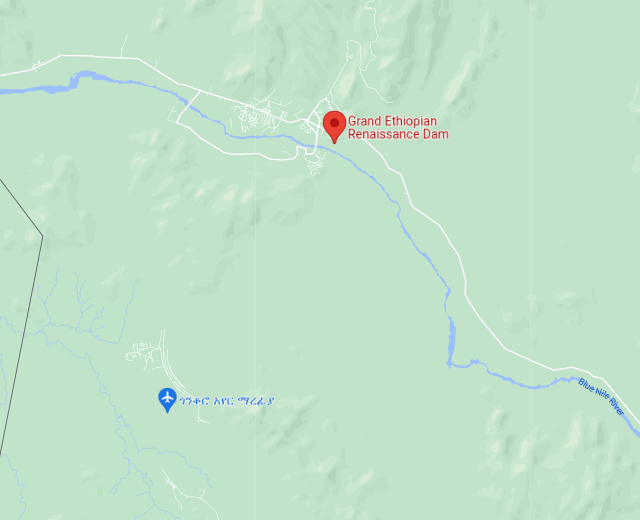
Ethiopia has built a giant freaking dam on the Blue Nile River just a few miles from their northern border where the Blue Nile River crosses into Sudan. Al Jazeera has a story.
With a planned installed capacity of 5.15 gigawatts, the dam will be the largest hydroelectric power plant in Africa when completed, as well as among the 20 largest in the world. - Wikipedia
They started building it in 2011 and it started generating electricity this year.
I was thinking about putting up a post about this, just because I had never heard of this project before. Seems like I should have heard something about a big deal like this, but no. A couple of days ago I started reading Maelstrom by Peter Watts and somewhere in the first few dozen pages he mentions this dam. Well, I can't ignore a coincidence like this, so this post. I've read a couple other books by Peter Watts and he's pretty great.
Note that the Blue Nile branches off of the main river at Khartoum. It heads southeast toward Ethiopia and just after it crosses the border is where the dam is.
Google Maps doesn't do a good job of portraying waterways. Can't say as I blame them, only a small fraction of the population gets out on the water, and the government has a whole army of people devoted to mapping water. So if you want to look at maps of rivers, search for images of maps using your regular browser.
Still, Google Maps is terrific. Here we have two views of the area being inundated by the water being held back by the dam. Both maps are about 14 miles across. First is the map view:
Not a lot of contrast between the land and the water, but if you look carefully you might be able to pick out the shore line and see that the lake is extensive.
Looking at the satellite view of the lake I noticed a large, curved line in the lower left quadrant. A little digging reveals this is a three mile long saddle dam. The water hasn't reached it yet, but it means the lake is going to get a whole lot bigger in the coming years. The saddle dam is 160 feet tall. Not giant, but still substantial.
Dutiful daughter got up early and drove to downtown Portland for an exercise class at The Bar Method and locked her keys in the car so I was called upon to interrupt my busy schedule (come on, I was reveling in being quoted by Dustbury) and rescue her. Since I am all the way downtown and it is still morning I should get my self a cup of coffee and since I have done my good deed for the day, I deserve a donut. I find a coffee shop two blocks away, but there is no reading material that appeals, so I continue on to Powell's, which ends up being a ten minute walk. I prowl the Science Fiction and Mystery sections looking for something good. I've recently read a couple of good books:
and put down several that I couldn't (mostly science fiction):
A Hymn Before Battle by John Ringo
Angelmass by Timothy Zahn
Cobblestone by Peter Lengyet, an Eastern European detective story
The Run To Chaos Keep by Jack L. Chalker
A Signal Shattered by Eric S. Nylund
Aces High by Bill Yenne, true story from WWII
Most of the science fiction was marred by over extensive arguing between characters. Aces High was just miserable, I don't know exactly what was wrong with it but I only got a few pages into it before I put it down.
I keep picking up Timothy Zahn books because there are several of them lying around the house and I think maybe one of them will be another Halo. Oh, he didn't write that? Never mind. There is a lot to like about Anglemass, and maybe some of his more recent books are better, but the continuing hostile conversations just wore me out. I got half way through before stopping.
The Run To Chaos Keep is complicated enough that you could use a small encyclopedia to keep track of the characters and all their special paranormal abilities. It would be an interesting story even if the characters were all human without any telepathic abilities. Making them all different aliens makes it too complicated to track.
I had hopes for Cobblestone, but it just did not engage me.
Alan Furst is my current favorite. He has written several books about espionage before and during WWII in Europe and they are just great. A Kingdom of Shadows is about the nephew of Hungary's ambassador to France. They both come from the upper class, meaning they have money. For example, at one point while he is on an errand for his uncle, the nephew calls Cartier in Paris from somewhere in Eastern Europe and orders a brooch, or a bracelet, or something, for his girlfriend, sight unseen. At another point he is arrested by the Roumanian police. He is on horseback and has just ridden down out of the mountains with a briefcase full of cash he has collected from a Hungarian Count for the support of the anti-Fascists. He is in jail for several weeks before his uncle manages to get him sprung. The cash disappears without a trace.
C.S. Friedman is one of my old favorites. She doesn't write a lot of books. Her style is maybe a bit overblown, but it's easy to read, i.e. it goes down smooth. In this one she posits the existence of longships: large spaceships made of rock, or perhaps hollowed out asteroids, that do not slow down when they approach a star and planets. Their velocity is not that high. Skimships (small ships capable of large changes in velocity) act as shuttles, decelerating when they depart the long ship to land on a planet, and then accelerating after leaving the planet to meet up with the longship again. This limits the time you can transit between the longship and the planets. It makes a sort of sense, changing the velocity of a three mile long asteroid would take a great deal of energy. Let the little ships do the hard work. They would be much more fuel efficient for these kind of maneuvers.
However, any velocity that would allow smaller ships to catch up with the long ship would really be unsuitable for travel between stars, at least in the lifetime of human characters, so ... we have "translations" that let the longships make giant jumps across interstellar space, making any velocity they do have insignificant.
It was still a good story. We have vampires, creatures of pure energy, evil armored lizard men, hive mind telepathy, wholesale enslavement of the entire explored universe, emotions running wild and best of all, revenge:
"There is no other pleasure, Ntaya exulted, equal to that of killing one's enemies." - top of p.473
A couple of days ago I asked a question about the TV series Vikings: Valhalla, and Boris Ivanov on quora tells me about the Russian Primary Chronicle, ". . . an Old East Slavic chronicle of Kievan Rus' from about 850 to 1110 . . ." (Wikipedia).
Today Yesterday Bayou Renaissance Man gave us a quote from an article on Richochet by Martti J. Kari, former intelligence Colonel in the Finnish Defence Forces. Peter's excerpt gives us a broad overview.