Intel's Ronler Acres Plant

Silicon Forest
If the type is too small, Ctrl+ is your friend

Showing posts sorted by relevance for query Voice of America. Sort by date Show all posts

Saturday, August 20, 2022

Distastefully Kooky Things Trump Has Said

A homeless man sits near the New York Stock Exchange, where many of the world's wealthiest companies are listed [Reuters]

I took the title from this piece. It's a great line.

Trump and I can agree: The US is a ‘third-world country’ by Belén Fernández

The imperial hubris on display in the use of such lingo towards poorer nations can’t hide America’s own failures.

When on August 8 the Federal Bureau of Investigation (FBI) raided Donald Trump’s Mar-a-Lago estate in Florida in search of classified documents, the ex-president of the United States decried the episode as “an assault [that] could only take place in broken, third-world countries”. He continued to lament that America had “now become one of those countries, corrupt at a level not seen before”.

Trump’s son, Donald Trump Jr, chimed in on Twitter with the assessment: “This is what you see happen in 3rd World Banana Republics!!!” Never mind that the FBI’s seizure of secret documents does not fit the “corruption” bill quite as well as some other characteristics of American democracy: say, the fact that non-taxpaying billionaires can be president or that the country is run as a crooked, oligarchic corporatocracy.

This is not the first time Trump has likened the US to a “third-world country”, which was also his epithet of choice when he lost the 2020 presidential election to Joe Biden. But Trump & Co are not the only members of the US ruling elite to exercise this vocabulary. The January 2021 attack on the US Capitol prompted a surge in pejorative “third world” and “banana republic” comparisons from everyone from Biden to George W Bush, former US leader and civilised ravager of Afghanistan and Iraq.

Indeed, it is impossible to understate the bipartisan imperial hubris that is on display in the casual deployment of such lingo. By implicitly and unironically mocking underdeveloped nations, the US political establishment appears to have conveniently forgotten the country’s own historical role in creating the “banana republic” phenomenon in the first place — and in ensuring that the “third world” remains, you know, “third”.

The term “banana republic” was coined in 1904 by American writer O Henry in reference to the Central American nation of Honduras, which, like neighbouring Guatemala, was an early victim of predatory US capitalism and corporate exploitation. The economic and physical wellbeing of the inhabitants of such lowly nations was naturally of no concern to the hemispheric behemoth, which ensured its unfettered access to regional resources by backing right-wing coups, bloody civil wars, corrupt dictatorships and death squads — in other words, stuff that was slightly more devastating than an FBI search of Mar-a-Lago.

The Cold War, of course, provided a handy alibi for US-backed killing worldwide, from Nicaragua to Angola — while also spawning the “third-world” designation that would go on to accrue patronising connotations. Once the communist menace had been replaced with the terrorist menace as the primary US excuse for lethal international interference, the remaining global superpower continued to extend a charitable hand to the impoverished “third world” — often via a form of corporate neocolonialism cast as “development”.

And while Trump’s recent tantrum about the US as a “broken, third-world” country can certainly be filed under the expansive category of Distastefully Kooky Things Trump Has Said, there is also an unintended element of truth to it. Like it or not, the US fits the third-world stereotype in many respects — and not just in terms of its oligarchic style of governance.

The US advertises itself as being at the vanguard of global “development”, but the nation’s healthcare, poverty and other indicators suggest a policy of wilful counterdevelopment instead. Back in 2017, Philip Alston, the United Nations special rapporteur on extreme poverty and human rights, visited the US for two weeks. At the end of his trip, he issued a statement on how he found the country “exceptional in … ways that are shockingly at odds with its immense wealth and its founding commitment to human rights”.

Despite managing to spend more money on “national defence” than China, Russia, the United Kingdom and a bunch of other big spenders combined, the US had some “40 million people” living in poverty amid glaring “contrasts between private wealth and public squalor”.

As Alston noted, the US was also “alone among developed countries” in insisting that human rights did “not include rights that guard against dying of hunger, dying from a lack of access to affordable healthcare, or growing up in a context of total deprivation”. So much for that line from the US Declaration of Independence about “inalienable” rights to “life, liberty and the pursuit of happiness”. It’s hard to pursue anything if you’re dead.

Speaking of death, infant mortality rates in the US are higher than in Cuba, an island that has spent more than 60 years under an asphyxiating US embargo. Trump himself imposed no fewer than 243 new sanctions against the Cubans — as punishment for their crime of pursuing national sovereignty over the “banana republic” model — and, for good measure, threw Cuba back on the US list of state sponsors of terrorism.

Back in the land of the free, meanwhile, homelessness has reached ghastly levels unseen even in many “underdeveloped” countries, and the US has long maintained the highest incarceration rate in the world — although it may have recently been surpassed by El Salvador, another place where US support for “human rights” has involved backing right-wing state terror.

Such is the ironic nature of imperial power, it seems, that the global hegemon responsible for oppressing much of the third world must also keep a significant portion of its own populace in third-world conditions.

As per Trump’s twisted logic, any attempt to hold him accountable for anything is evidence that the US is a “corrupt” and “broken, third-world” country. And while there’s no sense in wasting time on Trumpian delusion, we might nonetheless take the opportunity to recall that old saying about the broken clock — and to acknowledge that the US is definitively broken.

Belén Fernández is a contributing editor at Jacobin Magazine. And just what is Jacobin Magazine you might ask? 

"Jacobin is a leading voice of the American left, offering socialist perspectives on politics, economics, and culture."

Normally I am opposed to the left wing and socialism, but Belén is pointing out problems with our government which seems to be under the control of the of the supposedly socialist left wing. If we want to fix the problems besetting our country we are going to need to replace those who are currently in power with a different set of people, people who actually want to try and solve some of these problems. Perhaps the Forward Party can help.

Sunday, November 28, 2021

RARET

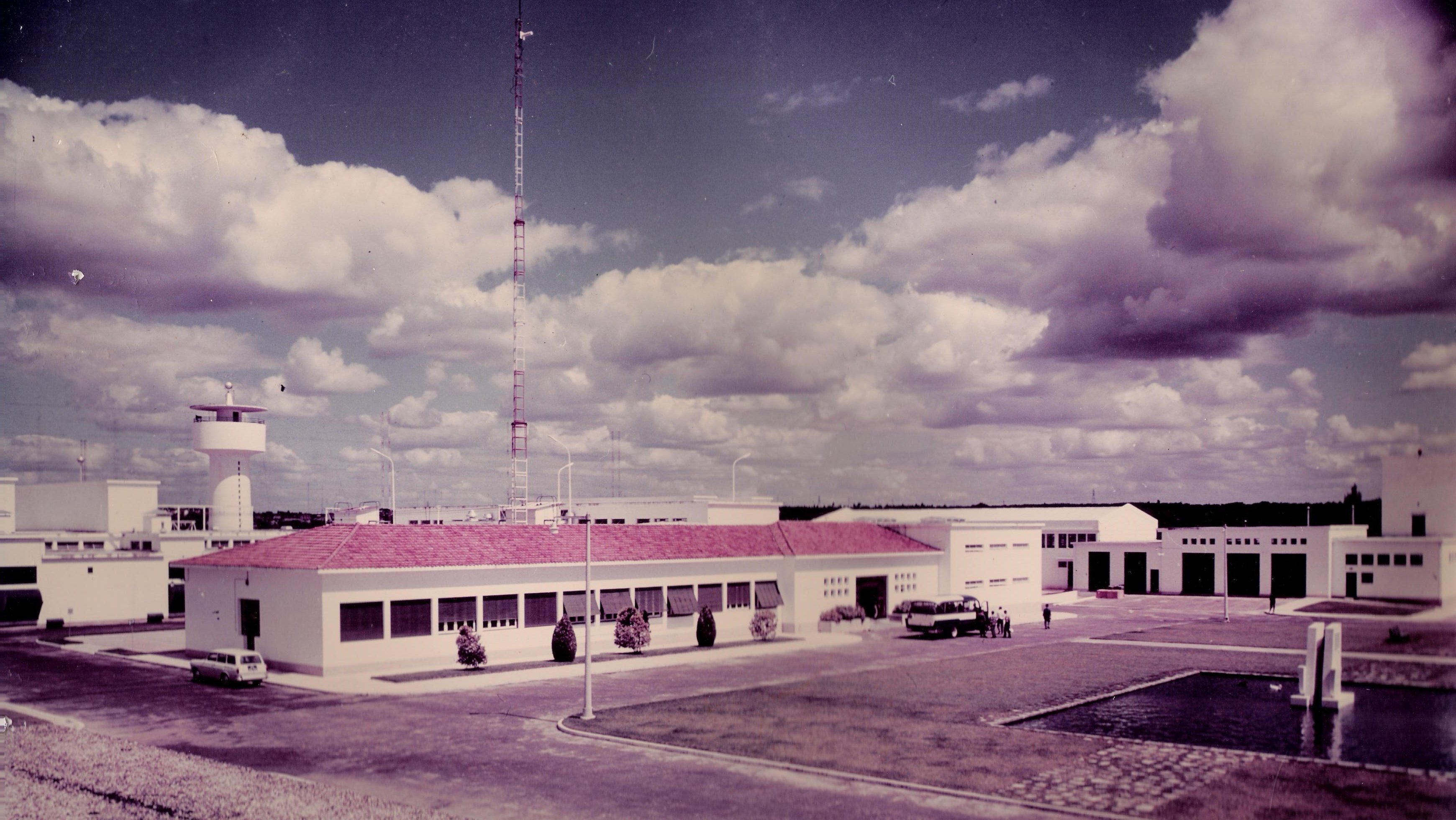
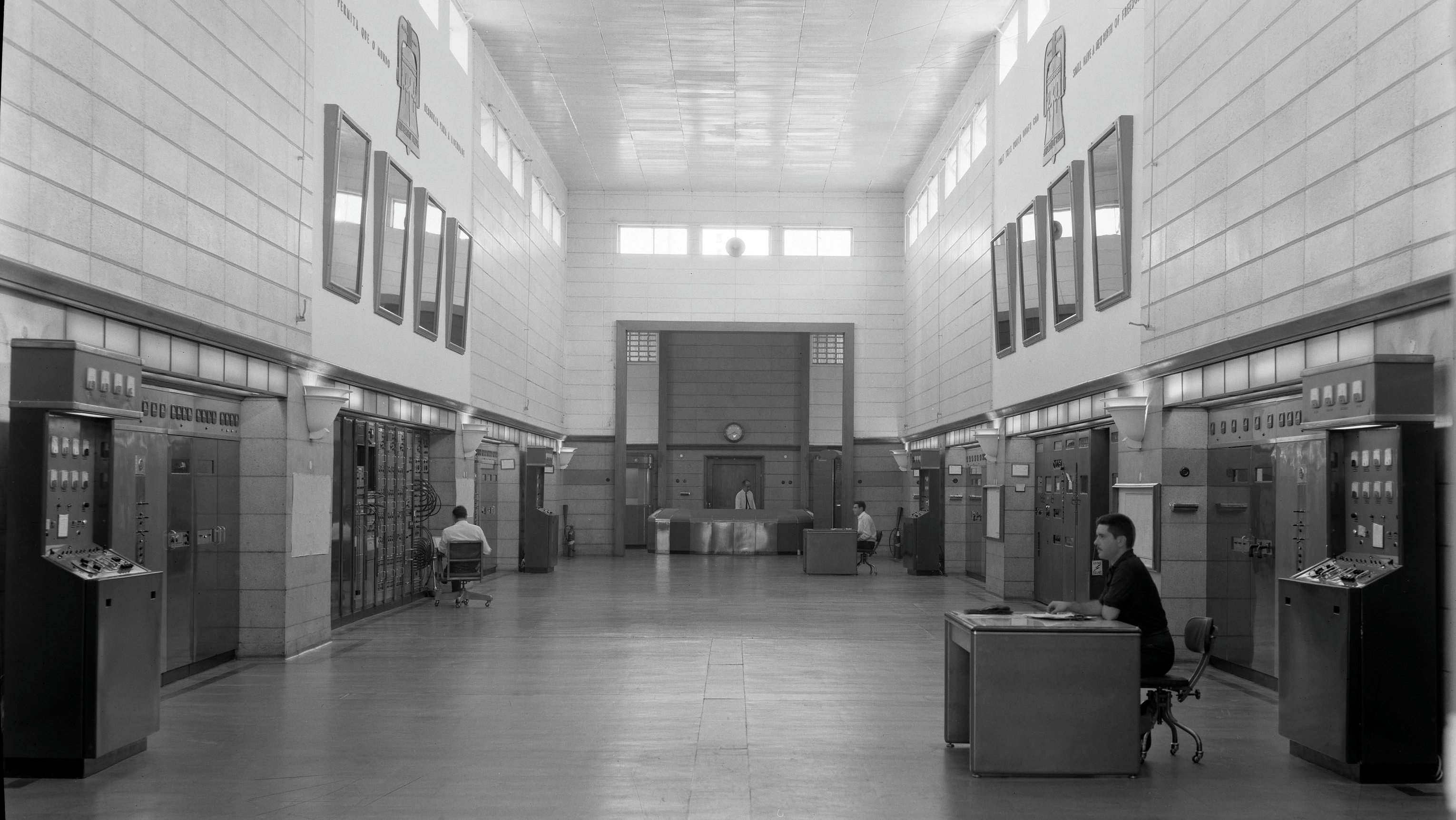
We started watching Glória, a Netflix series about a Radio Free Europe broadcasting station  in Portugal during the Cold War, so I thought I would see if there was any truth behind it. One thing I found was this story on The World News. The original is in Portuguese, Google translated it. The label on the first picture is completely wrong, but I think there was a school at the complex, so it might be from there.

Anna
11/1/2021

▲ "There were around 20 to 30 translators from Eastern countries in Portugal, the Portuguese officials did not know those languages. Therefore, these people could be infiltrated", says researcher Vítor Madaíl

Vítor Madaíl is investigating the impact of RARET in Portugal, the center for relaying anti-communist propaganda. How do you see the Portuguese series from Netflix? It could have happened.

When, in 2017, Vítor Madaíl was looking for a topic for his master's thesis in the Contemporary Modern History course at ISCTE, he ran into a problem. He needed a story from the second half of the 20th century that would illustrate the relationship between the United States of America and Portugal. The Marshall Plan? It was already studied. The Portuguese introduction into NATO? The same thing. It was at that time that he turned to broadcasting in the middle of the Cold War, a vital weapon in the struggle for soft powerbetween the Soviet Union and the USA. That's where it ended up at RARET, a mega relay center created on July 4, 1951, with 196 hectares and 1.5 kilometers of antenna field, planted in the Herdade de Nossa Senhora da Glória do Ribatejo, connected to Radio Free Europe and financed by the CIA. Little or no information existed. From the side of North American literature, RARET was treated as a mere automatism. On the Portuguese side, an article here, a report there, little more. The question remained: how come no one had picked up on a history with more than 40 years in which Portugal emerged as one of the points of combat in the middle of the Cold War?

It took two years to complete the investigation. He interviewed former employees (Portuguese and North Americans, some of whom have died), consulted various archives, such as the Hoover Institute (where there are historical records such as maps or recordings of meetings of the two countries or even RARET retransmissions) or the National Defense Archive (where he discovered the blueprints of that huge American-Portuguese broadcasting complex). But you want more. He is doing a PhD on the same topic, to follow the entire period after the Estado Novo. He wants to understand how RARET has maintained its democracy with Portugal.

Now, as the premiere of Netflix's first Portuguese production approaches, the series “Glória” (on November 5), based precisely on RARET, the Observer spoke with Vítor Madaíl to understand how it was possible to implement an operation of that level in middle of a rural region, far from the Eastern bloc and the US. And how is it that António de Oliveira Salazar's regime, which restricted freedoms, agreed to join this crusade. And of course, we also tried to find out if one of the premises of the series created by screenwriter Pedro Lopes and director Tiago Guedes was even possible: the existence of a KGB spy in RARET. “It was entirely possible that what was fictionalized could have happened. About 30 translators from Eastern countries who could be infiltrated were here. This happened in Munich, at the Radio Free Europe headquarters where all the American propaganda came from. Here, as far as I know, it didn't happen, but it was possible”, he says.

▲ Vítor Madaíl recalls that RARET followed "the idea that the BBC developed during World War II: the free French speaking to the French in the interior" - Association for the Defense of the Ethnographic and Cultural Heritage of Glória do Ribatejo

From what he told me before, the story of the series “Glória” might not even have happened, because the 40 years of a relay center in Ribatejo were not in the plans.
Exactly. Radio Free Europe [REL] was to come for ten years. The men of the National Committee for Free Europe, which overseen the REL, had an innocent idea, because they thought they could raise the countries of Eastern Europe by using radio broadcasts to replace the local governments in those regions. Ten years of intense propaganda through broadcasting would be enough to change the internal order. This even before the existence of RARET. Americans, having the Voice of America, which is the equivalent of the BBC or National Broadcasting radio, could not use it for the same purpose. That is, for anti-communist propaganda. So, this Committee was founded, which was a joint partnership between the CIA and the State Department. All early men come from the former OSS, which is the predecessor of the CIA. When in 1949 this committee was founded, it is not founded with Radio Free Europe, it is done with other organizations, very dedicated to supporting refugees from Eastern Europe. When, however, it is realized that this support would be useful if refugees were to speak for their own country, they instituted the concept of “substitute radio”. It's the idea that the BBC developed during World War II: the free French speaking to the French countryside. Then came the idea of ​​making a radio, we were in the golden age of this technology. But where could they put it? In the part of Germany occupied by the North Americans, taking into account the Potsdam and Yalta Agreements. First in Munich and then broadcasters in other regions. Emissions began on June 4, 1950 to Czechoslovakia. But they quickly realized that, emitting there in a medium wave,

Because the Soviets could more easily interfere.
Precisely. It is necessary to relocate. That's where an initial study of a North American company comes in, with maps, where they will see the areas to reach the preferred targets. Here Portugal is identified, as well as southwestern Spain and northern Morocco. Except that, in addition to the technical issues of where to place the issuer to get the best coverage, there were a number of political issues. Spain was an international pariah, Morocco was not, so which regime gave guarantees? The Portuguese.

Why was it neutral?
No. Don't forget that we already had Base das Lajes here. When the British left, the Americans entered. We joined the Marshal Plan, with which, in a second phase, we got funds. And then, Portugal's entry into NATO, as a founding member in 1949. The relationship was, therefore, privileged. On the other hand, the regime was anti-communist, so Salazar saw this almost as a crusade. Not only did he pursue the communists locally, he also had the chance to do so through this radio.

"Gregory Thomas installs himself at the Hotel Avis, where Calouste Gulbenkian was staying, and tells him that he has to talk to Salazar and then go to São Bento. It is Ricardo Espírito Santo who makes these contacts. In the background, all the plans are made , antenna projects, which land to buy... And it is Salazar who contacts the National Broadcasting directly."

On the obelisk at the entrance of RARET is Salazar's sentence about the liberation of peoples from the Soviet regime, which is an enormous contradiction.
Yes Yes. And that brings us to another question: why was RARET never well known? It was very difficult for Salazar to publicly link himself with the Americans. They then realize that only with an agreement with Portugal. But the genesis of Radio Free Europe had also been cloaked in the US. It was an entity created by individuals. Therefore, they wanted to hide any connection to the US government. If there was a problem, the government could say it had nothing to do with it. That's why there was originally no public agreement between the two countries. What there is is a concession at the request of an entity to the Portuguese government, as it had already done with Radio Marconi.

Did anti-communist contents first travel from the US to Munich and only then did they reach Portugal?
Yes. Initially they departed from New York and were transmitted to Munich. Afterwards, they continued on to Biblis and Horzelrichen, which they relayed to target countries in the eastern bloc. This operation was short-lived and on precarious bases. It was at this stage that they used the mobile transmitter “Bárbara”, which belonged to the OCSS, the predecessor of the CIA. That vehicle would come to Gloria. With the inauguration of the Munich facilities, Radio Free Europe now has facilities where journalists, editors, editors and all the necessary staff to produce the broadcast's contents have been placed. They went to Maxoqueira, the receiving centre, on various frequencies from different channels in order to be able to reproduce themselves in the best quality retransmission. The circuit was: Maxoqueira, Auto-Monumental Building in Lisbon (RARET headquarters), Glória, target countries.

As for the negotiations between the US and Portugal, did they take a long time?
A little. The negotiator, Gregory Thomas, arrived in January 1950. He only got a positive response in April of that year. However, when the Anonymous Society of Radio Retransmission was formed, it was published in Diário da República. And you look at that and you see a banal company. Looks like a radio repair company, for example. Nobody cared what it really was. In Portugal, being the beginning of the Cold War, with the Korean War raging, and when the Soviets said they already had missiles, it was thought that this operation could turn the country into a target. There is then a discussion if it is worth having a radio with those characteristics here. It turned out to be Salazar's personal wish. There was a conversation with Ambassador Scott Nash, to which I had access, where an audience is requested to expose all the American interest. It happened in December of that year. But always with the idea that the US government had nothing to do with it. Salazar quickly understands what this is about, but it is not clear that he knew the CIA was involved. But I knew it was led by someone connected to the US government. Going back to Gregory Thomas, who had been commercial attache during World War II, being an OCSS agent, he was based in Lisbon. Establishes contacts with the Portuguese elite, one of them is Ricardo Espírito Santo, uncle of Ricardo Salgado. who had been a commercial attache during World War II, as an OCSS agent, was based in Lisbon. Establishes contacts with the Portuguese elite, one of them is Ricardo Espírito Santo, uncle of Ricardo Salgado. who had been a commercial attache during World War II, as an OCSS agent, was based in Lisbon. Establishes contacts with the Portuguese elite, one of them is Ricardo Espírito Santo, uncle of Ricardo Salgado.

▲ The exterior and interior of RARET's main building, in Glória do Ribatejo, when the relay center was still in operation - Association for the Defense of the Ethnographic and Cultural Heritage of Glória do Ribatejo

That is, the country as a bubble.
Yes, more conspiracy in this story. This is the person Gregory Thomas turns to to talk to Salazar. I heard the recording. He installed himself at the Hotel Avis, where Calouste Gulbenkian was staying, and told him that he had to go talk to Salazar and then go to São Bento. It is Ricardo Espírito Santo who makes these contacts. Thereafter, the negotiation takes place with the Chairman of the Board. In the background, all the plans, antenna projects, which land to buy are made… And it is Salazar who contacts the National Broadcasting directly to inform about this operation, asking for their help. The director of the Issuer, Mário Novais, who has never been with him, remains with this “mission”. And it is there that, through Tomás Pinto Basto [a family of reference in navigation logistics in the Iberian Peninsula], the terrain of RARET is discovered.

Was it the first bet?
No, there were others. That whole area was appetizing. It was necessary to have a flat spot, without major interferences for the waves to come out freely, a remote place, close to Lisbon, with little population. Gloria obeyed almost all conditions. 70 kilometers from Lisbon, the material was going by boat. There were no roads. It is the North Americans who pay for the electricity, the roads, because the region had nothing. But it had the ideal technical conditions.

Going back to the story of the ten-year concession, when do you realize that the operation will take longer?
The Soviets fought back. In Poland, East Berlin and Hungary, for example. We are beginning to realize that RARET will have to be prolonged. There is an internal debate in 1955, midway through the concession, between the Minister of Communications, the Minister of the Navy, the Minister of the Air Force, among others, to understand what to do with that infrastructure after the concession ends. What was planned was that he returned to the State. But due to international events, the men at Radio Europa Livre understand that this is something to go on. In 61, during the renewal of the contract, diplomatic relations between the US and Portugal began to have problems because of the Colonial War. The Americans had not helped much at certain times, Portugal joins the UN in 1955 and is exposed to international criticism, the pressure from the Indian Union was quite great. Relationships, which had started in the 1950s, will become more strained. This culminates in the year of all dangers, which is 1961, with different episodes such as the invasion of Angola or the taking of Goa. When it comes to the negotiation phase, the Americans, who think that RARET is not a base for Lajes, are convinced that the concession will last. And behold, Salazar drops the bomb: there is no possibility of granting a new concession, a maximum of six months.

"In 74, the 25th of April occurs and it is the officials themselves who make an effort to stop RARET from leaving. The revolution stopped at the gates of RARET. communist cell there, where there is talk of an imperialist radio, but the truth is that the communist ideology stopped at the door where the other ideology was."

And this is Salazar's personal decision?
Yes. Americans are left to die. In August 61 the construction of the Berlin Wall begins, the Cuban crisis begins to escalate, and there is a transition from the Eisenhower administration to that of Kennedy. In other words, Americans need this means of soft power more than ever. It was an extremely important vehicle for revealing reality to the Soviets, according to the Americans. And that's when Salazar takes off the rug. But like the base of Lajes, it never completely removes the rug. It's just that, according to the internal reports I consulted, the Americans felt that this decision meant keeping silent for a year. It was necessary to move, representing more costs, and it was probably not even possible to make a RARET in the rest of Western Europe.

And the Soviet Union knew this. He felt at an advantage.
Clear. A lot of money was spent on their part trying to impede communications. A budget bigger than that of the Americans. It was astronomical.

So how is the imbroglio resolved?
It was delayed every six months. In April 1963 all this calms down, with a new contract being signed for another ten years. In 1973, Radio Free Europe was being campaigned at the congress where it was said to be a “relic of the Cold War”. That was the term. It even started before, with the publication of a magazine, Ramparts, where the link between the RFE and the CIA is exposed. Until then, that connection had been denied. A fundraising campaign, “Crusade for Freedom” was even created. But when you look at the money raised, you realize that they have nothing to do with it. The RFE was held by the CIA, no doubt about it. And this happens at a time when there was an intention to do away with radio stations, where advertising was carried out. Because there was an attempt to get closer to the Soviet countries. It was part of a time that had already passed. This was the campaign. There is even a secret study, carried out by the CIA, in 1969, which analyzes the consequences of the closure of the radio in West Germany, Portugal and Spain. However, the concession here ends. There is a period of calm in the USA, but in 1974 the military coup in Portugal, the 25th of April, took place. RARET is without a contract at the time. Americans are worried again.

Was this frictional environment present at RARET?

No. The employees continued to work quietly. In 1974, the 25th of April takes place and it is the employees themselves who are pushing for RARET not to leave. The revolution stopped at the gates of RARET. There is a small article in Avante from 1973 in which one realizes that there is a communist cell there, where there is talk of an imperialist radio, but the truth is that the communist ideology stopped at the door where the other ideology was. This one spoke louder. Because it had to do with people's survival. There is even a story where it is said that a man rebelled against this entire American context and whoever was in charge of RARET replied that he could leave, but the salary would continue to be paid. They didn't want waves.

It was another kind of waves…
Yes, positive waves. It's a Hertzian war that happens, that you don't see. As Vaclav Havel [the last president of Chescoslovakia and the first of the Czech Republic] says, the important thing for collapsing the Berlin Wall was not the shots or the bombs, but the weight and importance that Radio Free Europe had on the conscience of people.

▲ Vítor Madaíl is undertaking a PhD on the same topic, to follow the entire period after the Estado Novo. Wants to understand how RARET has maintained its democracy with Portugal - TOMAS SILVA/OBSERVER

After the 25th of April, and until the dismantling of RARET, were there any other fundamental episodes in your investigation?
A bomb attack in 1975.

The author was never known. There was talk of the FP25…
There is no evidence of that.

Couldn't figure it out?
No. The document was in the Benavente court, but it has already been thrown away.

But wasn't it a massive attack?
No. Two firecrackers blew off the antennas. They didn't fall. It was claimed by an anti-communist and anti-imperialist group. Ronald Reagan was coming here at that time, it was to get attention.

"At the time, we were at a stage where, in the North American perspective, the level of the conflict in Germany could be reached. And radio would be one of the places the Soviets would want to occupy. Having this backup in the extreme of the Iberian Peninsula was guaranteed. "

He told me in one of the first conversations we had that what can be seen in the series “Glória”, about a Portuguese spy, may even have happened…
There may have been. It is perfectly possible that what was fictionalized by Pedro Lopes could have happened. There were about 20 to 30 translators from Eastern countries in Portugal, the Portuguese officials did not know those languages. There had to be someone who edited, who chose the broadcasts, who translated at Maxuqueira [receiving center] what came from Munich. There could be a risk of rebroadcasting Radio Moscow broadcasts and that would be a shot in the foot. Therefore, these people could be infiltrated. And that happened in Munich, where there was even an attack on the premises of Radio Free Europe, which were destroyed. There are even stories of insiders who got to know each other thanks to news coverage. They were from the Romanian and Bulgarian secret services, for example. Not here.

But is it a possibility?
Yes. The PIDE, for example, had important control over the people who entered RARET.

This is visible in the series.
There is a report from the PIDE describing the safety of the Monumental garage. When Portugal joined NATO, the army was restructured. And one of the structures that were flagged as critical is RARET. As a concession, a private thing, it is immediately included in this defense plan for the interior as a critical point, like hospitals or refineries. For the Santarém military zone, since there were not enough forces, the responsibility, in case of an uprising, is assigned to the National Legion. RARET, right from the start, has a GNR post. It wasn't in Gloria, it was there. When we arrived on the 25th of April, the following week, a platoon of troops went there, which did not leave until August 1974. It was, therefore, of great importance. If there was no risk, they wouldn't go.

Didn't anyone in the Armed Forces Movement want to take over RARET?
No, no. They wanted to defend her.

With few documents and records from Portugal, what did you discover on the North American side in your research?
At first, Salazar only authorized the retransmission. It may look smaller, but no. He had the chance to say, on an international level, that nothing was transmitted from there. In the 1961 contract, it was already possible to transmit. At the headquarters, in Lisbon, there was a group of studios, in which everything was set up to change, at the last minute, certain events. The translators were even there to give voice to new recordings. But there was no newsroom. The content was produced in the USA. Here there was only one backup .

TThen, another of the reasons for RARET to be based here is that at the time we were at a stage where, in the North American perspective, it could reach the level of the conflict in Germany. And radio would be one of the places the Soviets would want to occupy. Having this backup at the far end of the Iberian Peninsula provided guarantees. As for the figures that made up RARET, there are many Portuguese linked to the regime. António Ferro's son, Tomás Pinto Basto, António de Cértima, who will remain until 1974. In fact, Pinto Basto will stay until the 80s.

▲ "The creation of a maternity hospital or a school (in the images) is also to ingratiate themselves with that population. So that not too many waves could arise" - Association for the Defense of the Ethnographic and Cultural Heritage of Glória do Ribatejo

Were everyone comfortable with this connection to the US?
It was more relevant to be working for anti-communism. People were imbued with a spirit. At the RARET meetings, they are convinced that they are doing a work for freedom, which in Portugal there was not. They were doing something for the west. Just as they are convinced that they are doing a great work in Africa. Gregory Thomas goes to Africa in the 60s and the newspaper O Séculogives this news. And here there is a double use, the two countries are used. “If the Portuguese are helping the North Americans against Soviet totalitarianism, you are helping us on the African continent against the same ideology, perpetuated by the liberation movements”, something like that. It's an exchange for an exchange. On the American side, it is also understood, at some level, that they are all fighting a common enemy. And in Africa too. They are almost matched fights. The final position of States at the level of presidents is one thing, but at the intermediate levels there was an understanding.

Did RARET's operation reach the level of the US president?
No, but that of the president of RFE yes. In Kennedy's presidency there is a big lunch to expose the work of the RFE that underwrites the role of the radio. I knew there were broadcasts in Portugal, but the conversation didn't end there.

What was, in fact, the power of RARET?
It was a platform comparable to the Lajes base, but within the scope of soft power. Without RARET, the Americans could not speak as they spoke to the Eastern bloc. Whenever any tension happened here, Americans were deeply shaken by the possibility of the broadcasters being shut down. In the 1980s, it tried to replicate the operation in Israel, but it never went ahead. In 1991, when there is no longer the Berlin wall and the democratization process begins to take place in the Eastern bloc, with the USSR already fallen, there is a new agreement for a 15-year concession, under the presidency of Bill Clinton. And here the agreements are already public, of course. The concession rose, however, through the ranks. Before RARET ended, there was, therefore, the will to continue, even with the end of the Cold War.

What is the fundamental reason for your order?
The costs. Under Bill Clinton's presidency, there is a relocation of US strategy, where the focus is on the ex-Soviet republics. And this had already started to happen in the 1980s. From 1977 onwards, they began to emit even further east. RARET also starts broadcasting to Portuguese communities around the world, during a certain time. In 91 there is a large investment in equipment. Meanwhile, Vaclav Havel makes a dollar offer to establish the headquarters of the RFE in the former communist parliament in Prague, out of Munich, where they still stand today. In other words, having the operation in Portugal no longer makes sense. This story ends with the 500 watt transmitters, which had recently been placed in RARET, where transmission begins to be made by satellite. In the 90's, this equipment is dismantled by former employees to be installed in the Mariana Islands. And this is where Radio Free Asia is created. They are there to work for a year. The operation moves to China, Vietnam, Cambodia, etc. RFE, on the other hand, goes to countries like Georgia or Azerbaijan. And that's it, the memory is waiting for someone to tell it.

"Who defended RARET? You have to think that the extreme left was critical, for example. How did the government withstand the pressure? What was the intervention of the US embassy? Why did RARET continue after the fall of the Berlin Wall ? That's all I want to address and investigate in my doctoral thesis."

How much has the Portuguese State collected in this period of more than 40 years?
I can't tell you concretely. Gregory Thomas told Salazar that in 1963, without the jobs, the net contribution was about 12 million dollars to the Portuguese state. Not to mention jobs, of course. Funds were important. As well as for the population of Gloria. They were the ones who asked RARET not to leave there.

Why did the Americans also want to invest in that region?
RARET was a Portuguese company. At the administrative level, 60% were Portuguese. The rest were American. On their part, there was an attempt at public relations. They realized that this social responsibility was important because it created bonds. Until the 60s there was medicine for work, but, apart from the benefit of working there, there was little else. The creation of maternity hospitals or schools is also to ingratiate themselves with that population. So that not too many waves would rise. That is, since we are here, we give something back. Tomorrow you can speak for us.

It was the American dream there.
Yes. And it had an effect.

Why did you get involved in this story? Do you have any connection to RARET or the region?
None. I had to present innovative work that no one else had done. I wanted a job in the second half of the 20th century and that involved the relations between Portugal and the USA, during the Cold War. When I started to read the bibliography, I realized that NATO was covered, as well as Lajes Base or the Marshall Plan. Several areas were covered. I had to find RARET after looking at broadcasting. I started to read the North American authors, and I realized that, in between, nobody spoke about this reality. Just a lot of passing. They treat RARET as if it were an automatism. We have to think that the relationship begins in the Estado Novo, but that, internally, there are many changes. So it doesn't affect anything? Was it the Americans who came here or the other way around? I started to realize that there was a pretty big story to tell.Exame , SIC also did a report there. But all very lightly. Who defended RARET? You have to think that the extreme left was critical, for example. How did the government handle the pressure? What is the intervention of the American embassy? Why did RARET continue after the fall of the Berlin wall? This is all that I want to address and investigate in my doctoral thesis.


Friday, March 2, 2018

Glenn Hauser's World of Radio

A story about The Tor Project got me looking into Voice of America which, through many twists and turns led me to Glenn Hauser's World of Radio. Poking around I came across a passel of QSL Cards, some of which are pretty cool, so I'm posting them here.

Radio Sofia, Bulgaria

Egyptian Broadcasting, Cairo

KVOH Los Angeles

Radio Club Mozambique

Radio Station Peace and Progress, Soviet Union

Voice of America, Rhodes, Greece

Radio Portugal

Wednesday, January 15, 2014

Lawrence Wright goes clear on Scientology and religious fervor

By Steve Duin | sduin@oregonian.com
Lawrence Wright grew up in Dallas, and while he realized early on that one can't be "a Methodist extremist," he also experienced the fiercely seductive nature of religious conviction.
In his subsequent tours of journalistic duty in the Middle East -- Wright won the 2007 Pulitzer Prize in nonfiction for "The Looming Tower: Al-Qaeda and the Road to 9-11" -- and the American back roads, he saw lives rearranged and unhinged by faith and zealotry.

"Again and again, I began seeing the influence of religion, driving people toward good and bad ends," the staff writer for The New Yorker said Tuesday at the Heathman Hotel.

And Wright saw far too little reflective coverage of what he calls "the effects of religious beliefs on people's lives -- historically, a far more profound influence on society and individuals than politics, which is the substance of so much journalism."

That's what eventually brought him to confront the Church of Scientology in "Going Clear: Scientology, Hollywood, and the Prison of Belief."  

"The thing you have to keep in mind about Scientology is that people go into it for the best of reasons," Wright said.  "They want to change the world.  They're idealistic.  They're willing to sacrifice."

Then they sign billion-year contracts, willingly accept sadistic levels of isolation and humiliation, vanish behind the delusional wall.  "The belief system, like with all religious beliefs, acts as a barrier to the rest of the community," Wright said.

"Sometimes, the crazier the beliefs, the higher the barrier, and the more solidified the community inside it."

In journeying to Oregon this week for the Portland Arts & Lectures series, Wright returned to the scene of L. Ron Hubbard's great World War II heroics -- in 1943, Scientology's founder claimed to have destroyed not one, but two mythical submarines while commanding a harbor patrol ship off Cape Lookout -- and the infamous "Battle of Portland."

That's the 1985 spring gala in which John Travolta and another 12,000 Scientologists descended on the Multnomah County Courthouse, claiming they were being persecuted for their religious faith in a suit brought by a young woman, Julie Christofferson Titchbourne, who argued she had wasted $3,200 in college savings on counseling.

After the jury awarded Titchbourne $39 million in damages, Judge Donald Londer declared a mistrial, ruling -- Wright notes -- that her lawyers "presented prejudicial arguments to the jury by saying that Hubbard was a sociopath and that Scientology was not a religion but a terrorist organization.
"Church members who had been in Portland would always feel an ecstatic sense of kinship."

Wright is clearly intrigued by that kinship.  "Religion is always an irrational exercise, no matter how ennobling it may be to the human spirit," he writes in "Going Clear," but Hubbard -- who got his start writing science fiction and died in 1986 -- had "an incorrigible ability to float above the evidence."

Hubbard argued Earth "was part of a confederation of planets under the leadership of a despot ruler named Xenu." He wrote in "Dianetics," first published in 1950, "However many billions America spends yearly on institutions for the insane and jails for the criminals are spent primarily because of attempted abortions done by some sex-blocked mother to whom children are a curse, not a blessing of God."

Give the guy credit, though: From the very beginning, Hubbard insists, "If it's not true for you, it isn't true," brilliantly anticipating the mantra of climate-change denial. 

Wright calmly lays out the byzantine history and manners of Scientology in "Going Clear." "My work is grounded in reality," he told a group of Oregon writers at the Heathman.

"'Truth is stranger than fiction' has always resonated with me."

So has religious conviction.  "There is no point in questioning Scientology's standing as a religion; in the United States, the only opinion that really counts is that of the IRS," Wright notes, and after stripping Scientology of its religions tax exemption in 1967, the agency reversed itself in 1993
What he questions, instead, is why so many souls lock themselves inside such a prison of belief.  Is it Hubbard's arresting voice?  Tom Cruise envy?

Or is it the genius of "finding the ruin" in every potential recruit, as Scientologists have long been trained to do, then offering that lost soul the refuge of belonging, even if that community is a padded cell?

"We can hold strong political views, and it may not affect your behavior at all," Wright said Tuesday.  "Strong religious views are different.  People often rearrange their whole lives around those beliefs, and it may go unnoticed by journalists.

"Maybe I thought I served a purpose in calling attention to that."

-- Steve Duin

Stolen entire from The Oregonian.

Update August 2021 fixed garbled header.

Thursday, May 26, 2022

Empire of Lies

Truth is Treason in the Empire of Lies - George Orwell

I am disgusted with the US Government and the constant stream of bullshit they produce. Oh, I don't blame them, most people don't have the time or inclination to think about world affairs, they are perfectly happy with listening to whatever the government tells them. 

If that information generates an emotional response, so much the better, that's what those yahoos in charge want, people who are fired up enough to follow them into the breach. Or over the cliff. 

In the forlorn hope of slowing our descent in madness, I give you a couple of items. The first is from our friends at RT, formerly known as Russia Today which is no doubt Putin's mouthpiece, much like The New York Times and the Washington Post are Biden's. The second is an hour long video about Izzy Stone, independent gadfly reporter. I haven't watched the whole thing, come on, it's an hour long, but it seems to be pretty well done.

Moscow warns of new ‘Iron Curtain’ - RT

The West tries to bar its own people from accessing alternative information on the conflict in Ukraine, Russia’s deputy UN envoy says

Washington and its allies have turned into a new “collective ministry of truth,” rigorously preserving their narrative on the ongoing conflict in Ukraine, Deputy Permanent Representative of Russia to the UN Dmitry Polyansky told RT on Thursday. The West has launched a massive smear campaign against Russia in the media and on the internet, the diplomat believes.

Western governments seek to spread views that are “beneficial to them but do not always correspond to the reality,” Polyansky said, adding that they ultimately seek to put their own population into a “bubble of lies” that makes it hard for an ordinary person to distinguish between factual information and a distorted picture of what is happening on the ground in Ukraine.

“That is behavior of a Ministry of Truth,” Polyansky said. The diplomat also said that Western governments try to dismiss any alternative information as fake or simply block access to it. He particularly pointed to the Western nations banning Russian outlets like RT and branding any information coming from Moscow or the Russian media as “propaganda.”

Here's the video: 


I.F. Stone's Weekly (1973) | A Film by Jerry Bruck, Jr.
reelblack

I wonder if the USA has any propaganda outlets operating in Moscow. I know there are Voice of America radio broadcasts, or at least there used to be. Don't hear much about them any more.


Tuesday, March 28, 2023

What the Hell Happened to Blood, Sweat & Tears?


Blood Sweat & Tears - And when I die
whatiship73

Variety has a review of What the Hell Happened to Blood, Sweat & Tears?, a documentary about the band's 1970 tour of eastern Europe. Owen Gleiberman fills us in: 

As the documentary explains, David Clayton-Thomas [BS&T lead singer] was from Canada, where he had grown up as a delinquent troublemaker. As a star, he still had traces of his wild ways; when he was arrested for allegedly threatening a girlfriend with a gun, the U.S. officials decided to deny him his green card. He was going to be kicked out of the country — which meant, in a pop-music landscape even more America-centric than it is now, that the band, in effect, would be finished.

Rather than accept this fate, Blood, Sweat & Tears cut a deal. In an arrangement brokered by the lawyer Larry Greenblatt, they agreed to become the first rock band to play in countries behind the Iron Curtain, in a cultural-exchange tour sponsored by the U.S. State Department. Why would a government headed by Richard Nixon make this offer, even as it was threatening to deny Clayton-Thomas his green card? It was a form of blackmail. The reason that the State Department felt like it needed Blood, Sweat & Tears — maybe more than the band needed them — relates to the special place the group occupied.

In 1970, the revolution was still officially on. (All those middle-class kids hadn’t quite realized yet that they were just…middle-class kids. That would take until about 1971.) Rock ‘n’ roll was still the voice of the revolution, and the counterculture, enraged by the atrocities of Vietnam, despised anything to do with the Nixon establishment. To play ball with the State Department was to make a deal with the devil.

Yet the success of a band like Blood, Sweat & Tears was already knocking down those kinds of perceptions. The band’s members were against the war, but except for the guitarist Steve Katz (who we see in one clip sounding like Dustin Hoffman playing Tom Hayden), they weren’t really political. Offered the chance to salvage their success by spending June and July of 1970 touring Yugoslavia, Romania, and Poland, they thought, “Why not?”

The footage we see makes the case that there was actually a powerful moral reason to do the tour. The State Department, in its blunderbuss way, wanted to open up a kind of détente with the citizens of Communist Eastern Europe. This sort of exchange had actually begun in 1954, but with classical and jazz musicians. So why not rock ‘n’ roll — or more to the point, a rock band that straddled categories in a way that could bridge the free West and the oppressed Eastern Bloc?

I graduated from high school in 1969, so I was aware of Nixon, the Vietnam war and Blood, Sweat and Tears, but I don't remember hearing anything about this tour.

Update April 2024 replaced missing video.